Bakuchiol for Acne-Focused Skincare: Formulation Fit, Evidence, and Cosmetic Claim Boundaries
Date:October. 19 2026
share:
For formulators, the practical question is not whether
Bakuchiol is associated with acne care. It is whether the selected grade can
serve a defined cosmetic role in the complete formula, with evidence and
wording that fit the target market.
At ANECO, we work backward from the finished product:
defining the brief and format, confirming material and formula fit, assessing
evidence for the tested system, and reviewing the final cosmetic wording.
Match Bakuchiol to the Product Goal
The product brief comes before the ingredient name. It may
target blemish-prone appearance, post-blemish marks, visible oiliness or uneven
texture. ANECO’s natural-ingredient selection guide
compares Bakuchiol with other natural-origin actives by skin concern and
formula type.
We treat Bakuchiol as a formulation option, not a universal
acne solution. It may suit a blemish-care, antioxidant, oil-control or
tone-evening concept, or a cosmetic retinol-alternative position, when that
role matches the finished product’s intended
benefit. We first define the target appearance, product format and formula
direction before selecting the active system.
When visible oiliness is part of the brief, we may also
assess a separate oil-control active such as our AC-ZPCA Zinc PCA.
Raw-Material Specifications Determine Formula Fit
Grade qualification is the first formula-fit gate. Before a
finished formula enters screening, ANECO confirms the Bakuchiol grade, its
supporting documents and the material conditions that may affect processing and
stability.
Verify the Bakuchiol Grade and Supporting Documents
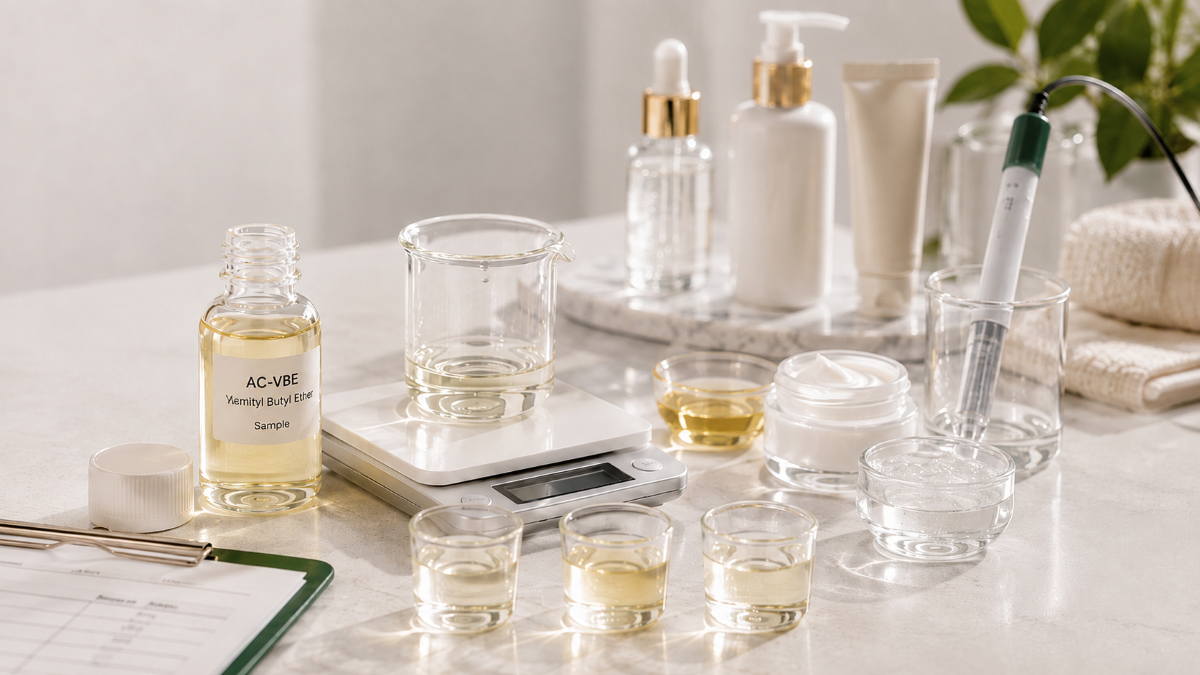
Our AC-Bakuchiol specification page
identifies Bakuchiol as the INCI name, lists CAS Registry No. 10309-37-2, and
describes the material as derived from Psoralea corylifolia
seeds and produced through supercritical CO₂ extraction.
For initial screening, we use the published specification:
AC-Bakuchiol is oil-soluble and almost insoluble in water, with an assay of ≥99% by HPLC, psoralen plus isopsoralen at ≤25 ppm, water at ≤1% and residual
ethanol at ≤50 ppm. We treat these figures as
preliminary references and request the current grade-specific TDS, controlled
specification and COA before procurement or formula approval.
On production and quality-management
page, we describe controls from raw-material inspection
through final-product testing and identify HPLC, UV-Visible spectrophotometry
and pH measurement as available testing capabilities. The actual test items for
AC-Bakuchiol follow the current grade specification and quality plan as the
sample moves toward formula screening and scale-up.
Translate Material Specifications into Formula Screening
For formula screening, we refer to ANECO’s current technical
recommendations, including a suggested skincare use level of 0.5%–1%, a
formulation pH of ≤6.5, and incorporation into the oil, polyol, or
emulsifier phase. These parameters are intended as preliminary formulation
guidance rather than universal limits and should be confirmed against the
latest TDS. We also recommend evaluating the finished formula’s stability
under exposure to light, heat, oxygen, strong acidic conditions, and high
concentrations of metal ions.
In our checklist, TDS means
technical data sheet, SDS means safety data sheet and COA means certificate of
analysis.
Qualification area
Buyer checks
Development relevance
Identity
and source
INCI, CAS,
botanical source and extraction method
Confirms
raw-material identity
Assay and
impurities
HPLC
assay, psoralen limits and residual solvents
Informs
quality and safety review
Solubility
and use
Oil
solubility, dosage, phase addition and pH guidance
Determines
formula compatibility
Stability
Light,
heat, oxygen and metal-ion guidance
Informs
stability screening
Technical
documents
TDS, SDS,
COA, specification and storage data
Guides
sampling and procurement
The assay qualifies the raw material; it does not establish
finished-formula performance. After we confirm the controlled specification and
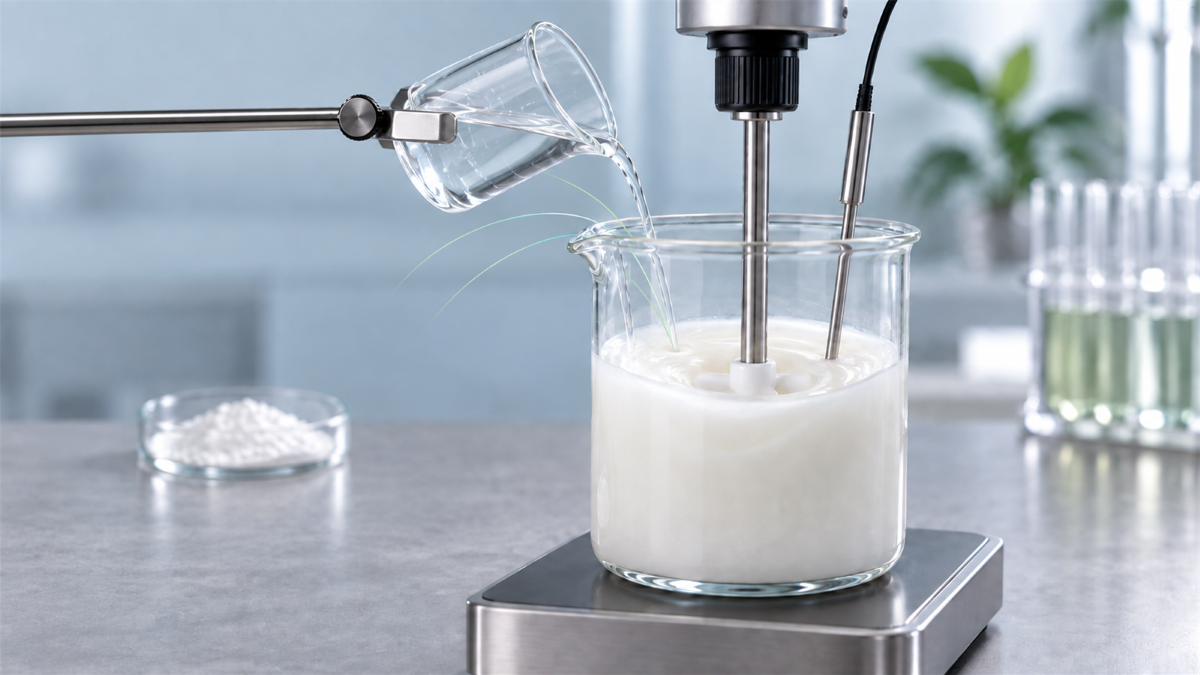
batch documents, we screen dissolution, colour or odour change, emulsion stability and package compatibility
in the intended system. The results determine whether the prototype is ready
for scale-up.
From Ingredient Evidence to Formula-Level Decisions
Evidence becomes useful for development only when the study
formula, endpoint and use context are comparable to the planned product.
Match Study Evidence to the Planned Formula
Use mechanism data to frame hypotheses, formula-level
studies to assess comparable systems, and finished-product testing to support
the marketed formula.
A study is relevant to a planned product when its active
combination, concentration, vehicle, use protocol and outcome measure are
sufficiently comparable. Apply results from a combination formula to that
combination system. Assess an isolated Bakuchiol formula through evidence
generated for its own formula and intended use.
The evidence boundary can be summarized as follows:
Evidence type
May support
Does not prove alone
In vitro
or mechanism data
Ingredient
rationale and formulation hypothesis
Finished-product
performance
Combination-formula
study
Performance
of the tested formula system
Isolated
Bakuchiol performance
Interpret Clinical Studies by Formula Context
For example, the 2021 facial-acne pilot study evaluated
a patented cream containing 0.5% Bakuchiol in 13 people with mild-to-moderate
acne over 12 weeks. The study reported reductions in inflammatory lesions and
improvement in existing post-inflammatory hyperpigmentation (PIH). Its small,
open-label design provides limited context for a comparable
Bakuchiol-containing cream and does not establish performance for other
formats, concentrations or product protocols.
The 2026 randomized, open-label noninferiority trial
in 70 adults with mild-to-moderate acne compared a multicomponent cream
containing 0.2% Bakuchiol, 1% salicylic acid and other ingredients with 0.025%
tretinoin over 12 weeks. The Bakuchiol–salicylic
acid cream was reported as noninferior to tretinoin for the study’s acne endpoint. That finding applies to the tested combination
formula relative to tretinoin; it is not a study of isolated Bakuchiol and does
not establish that Bakuchiol alone is equivalent to tretinoin. A Bakuchiol-only
formula would require its own evidence.
A systematic review of Bakuchiol in
dermatology reported that 30 records matched its search
terms; one did not meet the inclusion criteria. The remaining 29 comprised 16
preclinical studies, seven clinical studies, three commentaries, two narrative
reviews and one adverse-event report. The review provides development context
and supports the need for additional research across dermatological
applications.
For sample evaluation, AC-Bakuchiol product information can
inform technical discussion. Any performance conclusion must remain tied to the
finished product and the conditions under which it is tested.
Claim and Technical-File Review Determine Market Readiness
At ANECO, we compare the tested formula with the marketed
formula, link each proposed benefit to a defined endpoint and finished-product
result, and review the final wording against the target market.
Appearance-focused
wording supported by the finished product, such as improving the appearance
of uneven tone or blemish-prone skin. Bakuchiol is not listed among the acne
actives in M006.
Treating
or preventing acne, acne-treatment wording, bacteria-killing claims,
structure/function claims or equivalence claims involving tretinoin
Cosmetic
claims that describe the finished product’s evidenced function or appearance benefit and remain consistent
with the product information file.
Disease-treatment
presentation, unsupported extrapolation of ingredient properties to the
finished product, or wording that exceeds the available evidence
Cleansing,
moisturising, keeping skin in good condition, or
suitability for people prone to acne or spots. Cleansing-based prevention of
occasional spots may depend on the product presentation.
Treating,
curing, clearing or preventing acne or spots; anti-inflammatory,
anti-infective or sebum-control claims presented as action against acne
FAQ
Is Bakuchiol the Same as Retinol?
No. Bakuchiol and retinol are different ingredients. “Retinol alternative” describes a
positioning direction, not proof of equivalence. Any comparison must be tied to
the finished formula and its supporting evidence.
Does Bakuchiol Have Direct Clinical Evidence for Acne?
Limited, formula-specific evidence exists. The 2021 pilot
study evaluated a small group using a cream containing 0.5% Bakuchiol over 12
weeks. It provides context for a comparable cream, but does not establish
efficacy for isolated Bakuchiol or every finished product.
What Should a Buyer Prepare Before Requesting Finished-Product Testing?
Prepare the final or near-final formula, target dosage,
vehicle, package, intended use protocol, target market, proposed claims and
desired endpoints. These inputs allow the testing plan to reflect the product
that will be marketed and support later performance and claim review.
What Should a Buyer Do if the Product Name and Assay Do Not Match?
The grade should not be approved from the public product
page alone. If the product name shows “Bakuchiol
98%” while the specification lists an assay of ≥99% by HPLC, the current TDS, COA and controlled specification
should clarify whether these refer to the same grade before procurement or
marketing use.
Can the Same Cosmetic Wording Be Used in Every Market?
Not automatically. Cosmetic wording must be assessed
against the target market, final product presentation and supporting evidence.
In the European Union, the EU common criteria for cosmetic
claims help assess whether the wording and evidence are
consistent. In Great Britain, CAP/ASA guidance on acne and spots
treats acne-treatment wording as generally medicinal. The final wording should
therefore be reviewed separately for each intended market.
Conclusion
Bakuchiol can earn a place in an acne-focused cosmetic
formula when the product goal, formula system and
evidence plan point in the same direction. The finished product—not the ingredient name alone—then
becomes the basis for technical review and development decisions.
We can help teams move from AC-Bakuchiol documentation to
sample evaluation and formulation discussion. Contact our technical team with your product format,
target dosage, pH range and intended market to begin the conversation.
By clicking "Accept," you agree to the storing of cookies on your device to enhance site navigation, analyze site usage, and assist in our marketing efforts.