


 Request a Sample
OECD 301D
APG reached approximately 70% biodegradation after 28 days.


Alkyl Polyglucoside Surfactants
Chemical name: Alkyl Polyglucoside
CAS Nos.: 68515-73-1, 110615-47-9, etc.
NEW GENERATION GREEN & MILD SURFACTANTS FOR PERSONAL CARE, HOME CARE AND I&I
ANECO APG Series includes nonionic alkyl polyglucosides and related blends for personal care, home care and I&I. The range covers C4-C14 alkyl chains and several INCI options.
Product Snapshot
Identity, raw materials and carbon-chain range for the APG Series.
| Product Name | APG Series |
|---|---|
| INCI / Chemical Name | Alkyl Polyglucoside |
| Grade / Form | Single APG grades and multi-component surfactant blends |
| Surfactant Type | Nonionic |
| Carbon Chain Range | C4-C14 |
| Raw Materials | Glucose and fatty alcohols from renewable plant sources |
| Applications | Personal care, home care and I&I |
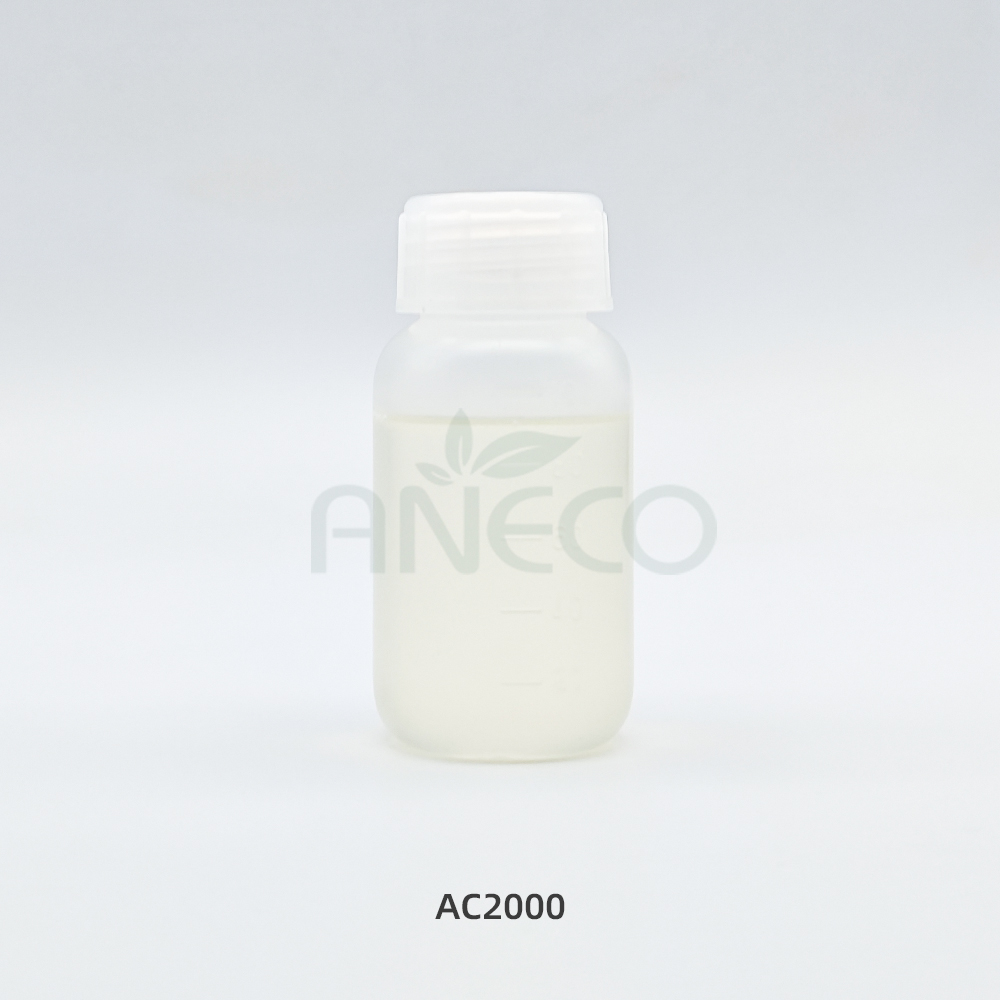
| Single APG Grades | AC1200, AC2000, AC810, AC818, AC8170N, AC0810 50%, AC0810 60%, AC0810N 60%, AC215, AC225N, AC600, AC650, AC425N, AC4, AC6, AC8 and AC10 |
| Multi-Component Systems | AC110, AC611L, AC-PO65 and AC-M68 SV |
| Packaging | 220 kg drums, 1,100 kg IBCs and ISO tank supply |
Nonionic alkyl polyglucoside surfactants, with related blends listed separately.
Cleansing, foaming, wetting, emulsification and dispersion.
220 kg drums, 1,100 kg IBCs and ISO tank supply.
Performance
APG performance data cover biodegradation, carbon-chain selection and surfactant-blend behavior.
APG reached approximately 70% biodegradation after 28 days.
APG showed lower irritation in the comparison.
Multiple APG options to meet different formulation needs, enabling adjustable foam strength and stability.
APG improved detergency with LAS, AES, FAS and CAB; the strongest synergy in the comparison was with CAB.
C8-C10 grades are positioned for fast wetting and spreading.
C12-C14 grades are positioned for rich, stable foam, oil removal and viscosity support.
APG supports emulsification and soil dispersion in cleaning systems.
APG is used with anionic and amphoteric surfactants to improve blend performance.
Application and Processing Guide
Select the product by INCI, carbon chain, active matter and intended application.
AC110, AC611L, AC-PO65 and AC-M68 SV are blends. Use the full INCI composition for the selected product.
Record the intended application, target active surfactant content, pH, water hardness and required foam profile when comparing APG grades. Include the product code and full INCI so a single APG grade can be distinguished from a multi-component blend.
If you are converting an as-supplied addition into active surfactant content, use the APG concentration calculation guide. For a practical evaluation sequence, see comparing APG surfactants in application trials.
A percentage alone does not identify an APG grade or its INCI composition. When comparing AC0810 50% with another grade, check whether the quoted value is active matter or dry matter and whether the test methods match. Do not treat a solids result as an interchangeable active-surfactant result.
Keep the same product code, full INCI and specification revision on the sample request and quotation. Compare the sample's COA with that specification, including the stated measurement conditions. For a supply enquiry, include the required quantity, packaging and destination alongside the application; these details allow the commercial terms to be checked for the selected grade.
Documents and Support
ANECO provides technical, quality, formulation and regulatory documentation for APG product selection and commercial approval.
APG Series is a range of nonionic surfactants made from glucose and fatty alcohols. The single-grade range spans C4-C14, with related multi-component systems listed separately.
Available support includes TDS, SDS/MSDS, specifications, COA, composition breakdown, process flow, formulation guidance and market-specific declarations.
FAQ
Grade selection depends on INCI, carbon chain, active matter and application.
APG Series is ANECO's range of Alkyl Polyglucoside surfactants and related blends for personal care, home care and I&I applications.
Grades differ by INCI composition, carbon-chain length and application market. AC110, AC611L, AC-PO65 and AC-M68 SV are multi-component systems and are shown separately from single APG grades.
Technical data include OECD 301D biodegradation, an OECD 404 irritation comparison, foaming by carbon-chain length, emulsification and surfactant-blend performance.
Set the process from the selected grade's active matter, pH range and preservative system, then verify performance in the finished formula.
The formulation guide positions C8-C10 grades for fast wetting and spreading, and C12-C14 grades for rich, stable foam, oil removal and viscosity support. The separate foaming comparison shows the strongest foaming performance at about C10.
APG products are available in 220 kg drums, 1,100 kg IBCs and ISO tank supply.
Supporting documents cover non-animal origin, non-nanomaterial status, SVHC, CMR, California Proposition 65, BSE/TSE, Halal, Kosher, Vegan, regulatory compliance and country of origin.
TDS, SDS/MSDS, specification, COA, composition breakdown, process flow chart, formulation guidelines, performance files and regulatory declarations are available from ANECO.

Tel: +86 25 6606 0698
E-mail: [email protected]
Business Hours: Mon–Fri,
09:30–12:30 & 14:00–17:30 (GMT+8)


