Alpha-arbutin and beta-arbutin both support skincare formulas for dark spots and uneven tone. Their key difference is the bond connecting glucose to hydroquinone, which affects how they interact with the pigment-forming enzyme tyrosinase. In an in vitro study using tyrosinase derived from human malignant melanoma cells, alpha-arbutin showed stronger inhibition. For your formula, purity, pH, processing temperature and product category also matter.
Alpha-Arbutin vs Beta-Arbutin Chemical Structure and Sources
Alpha-arbutin and beta-arbutin both contain glucose linked to hydroquinone. The difference lies in the arrangement of this bond, known as a glycosidic linkage. This affects how each form interacts with tyrosinase, an enzyme involved in melanin production. In the comparative human tyrosinase study by Sugimoto and colleagues, alpha-arbutin inhibited the enzyme more strongly than beta-arbutin.
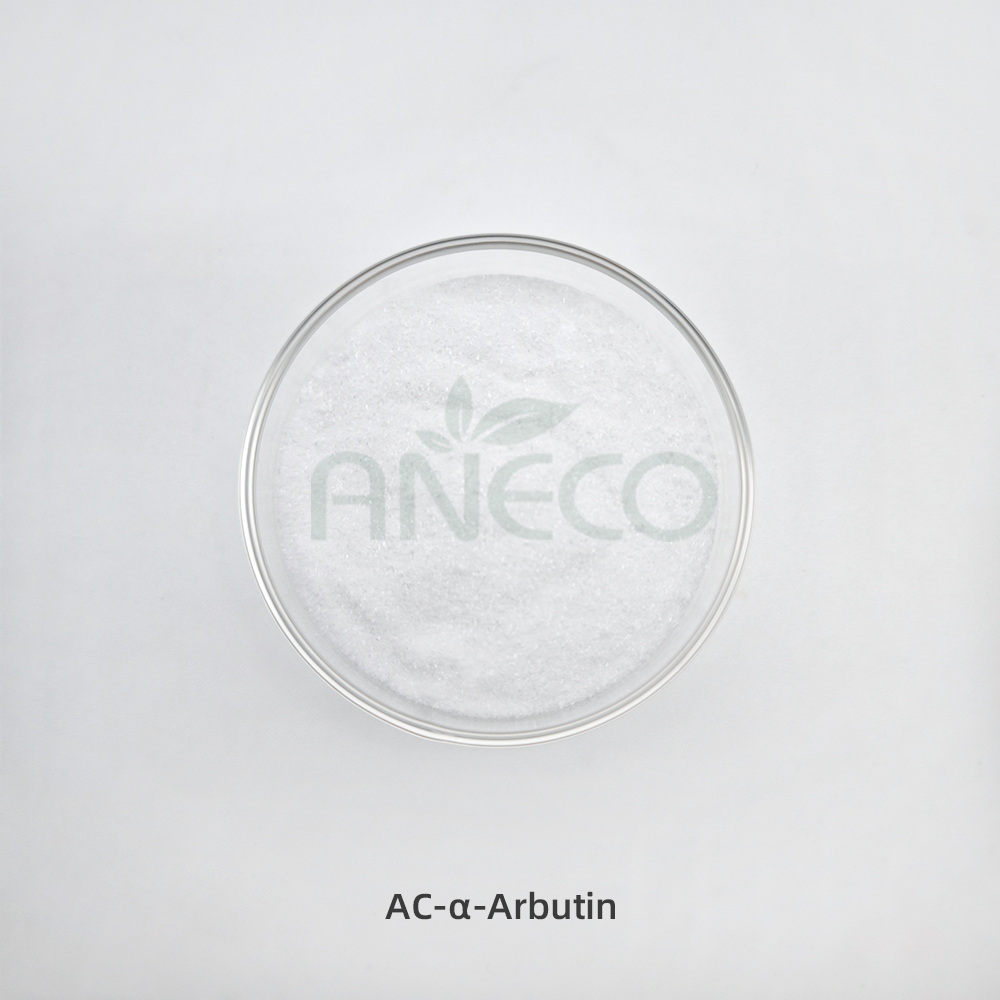
Beta-arbutin occurs naturally in plants such as bearberry, but this does not mean that every commercial beta-arbutin ingredient is plant-extracted. ANECO's AC-α-Arbutin is produced through an enzyme-based biotechnology process. For either form, sourcing claims should be supported by documentation for the supplied material, including its feedstocks and manufacturing route.
Feature
Alpha-Arbutin
Beta-Arbutin
Bond between glucose and hydroquinone
Alpha linkage
Beta linkage
Effect on human tyrosinase in the cited study
Stronger inhibition
Weaker inhibition
Commercial source or production route
ANECO AC-α-Arbutin is produced through an enzyme-based biotechnology process
Commercial beta-arbutin may be plant-extracted or produced through another documented manufacturing route, depending on the supplier
When comparing alpha-arbutin and beta-arbutin for a skincare formula, ingredient selection should consider the desired brightening target, source and brand positioning, intended product area, purity and impurity control, formulation pH and processing temperature. A facial serum may target individual dark spots. A body lotion covers a larger skin area, so the amount applied also matters. For a product focused on plant-derived ingredients, the commercial material's source and production method become key considerations.
Skin Benefits Tyrosinase Inhibition Dark Spots and Uneven Tone
Tyrosinase is an enzyme involved in producing melanin, the pigment that gives skin its color. Arbutin inhibits this enzyme, making it useful in skincare formulas for dark spots and uneven tone. These products aim to make dark spots less noticeable and help the complexion look more even.
A 2003 study by Sugimoto and colleagues compared arbutin derivatives using tyrosinase from human melanoma cells. Alpha-arbutin inhibited the enzyme more strongly than beta-arbutin. This finding provides a mechanistic basis for using alpha-arbutin in brightening formulations.
The study measured enzyme activity under laboratory conditions. Visible results also depend on the finished formula, including how it delivers alpha-arbutin to the skin and keeps the ingredient stable during storage. Testing the finished product shows how these factors work together to improve the appearance of dark spots.
Alpha-Arbutin Purity and Hydroquinone Our Ingredient Specifications
Our AC-α-Arbutin is produced through enzyme-based biotechnology and has a purity of at least 99.0% Alpha-Arbutin, measured by HPLC. Its specifications cover ingredient identity, hydroquinone content, water solubility and recommended formulation conditions. The enzyme-based production route, HPLC assay and impurity limit provide clear reference points for ingredient selection and incoming-material acceptance.
Property
AC-α-Arbutin details
Cosmetic ingredient name (INCI)
Alpha-Arbutin
CAS number
84380-01-8
Production method
Enzyme-based biotechnology
Assay (HPLC)
≥99%
Hydroquinone content
No more than 10 ppm
Solubility in water
151 g/L at 20°C
Recommended formulation pH
5–7
Processing temperature
Below 40°C
Choosing Alpha or Beta Arbutin Product Fit and Use Levels
Alpha-arbutin may be suitable for formulas focused on targeted brightening. Laboratory research on human tyrosinase supports its role in controlling melanin production. Clear processing guidance also helps formulators plan its incorporation.
Use levels for alpha-arbutin and beta-arbutin depend on the target market and product category. The SCCS arbutin safety assessment considered alpha-arbutin safe up to 2% in face creams and 0.5% in body lotions, and beta-arbutin up to 7% in face creams under the assessed conditions. These concentrations are not global legal limits; formulators should verify local cosmetic regulations and hydroquinone requirements before finalizing the formula.
Our selection process brings together the brightening goal, ingredient source and product format. Processing guidance shapes how the active enters the formula. Finished-product testing then evaluates stability and brightening performance. This connects ingredient selection with the product's intended benefits.
Frequently Asked Questions
What Are the Advantages of Alpha-Arbutin Over Beta-Arbutin?
Alpha-Arbutin showed stronger inhibitory activity against human tyrosinase than Beta-Arbutin in the comparative laboratory study cited below. This makes it a useful option for skin-brightening formulations, but stronger enzyme inhibition does not guarantee proportionally greater visible results. Finished-product performance depends on concentration, stability, delivery and application conditions.
Are Alpha-Arbutin and Beta-Arbutin suitable for sensitive-skin products?
Both Alpha-Arbutin and Beta-Arbutin can be considered for sensitive-skin products. Suitability depends on the finished formula, including active level, product base, fragrance, preservative system, pH and application area.
Can Alpha-Arbutin and Beta-Arbutin be formulated with niacinamide or vitamin C?
Alpha-Arbutin and Beta-Arbutin can be included in formulas containing niacinamide or vitamin C. The result depends on the vitamin C form and the complete formula. Pure L-ascorbic acid and vitamin C derivatives have different formulation requirements, so check pH, solubility, color, odor, processing order and active-content retention during development.
How should Alpha-Arbutin and Beta-Arbutin be stored before formulation?
Keep Alpha-Arbutin and Beta-Arbutin in their original sealed packaging in a cool, dry place. Protect the materials from moisture, excessive heat and direct light, and limit repeated opening.
Conclusion
Alpha-arbutin and beta-arbutin are two forms of arbutin with different formulation considerations. Alpha-arbutin showed stronger inhibition of human tyrosinase than beta-arbutin in the cited study. The best choice also depends on purity, source, product format, pH, processing temperature and finished-product stability. Beta-arbutin occurs naturally in plants, but commercial beta-arbutin can be made through different production routes. Plant-extracted beta-arbutin may support botanical positioning when its origin is documented, while our enzyme-produced AC-α-Arbutin offers a defined production route and specification profile.
If alpha-arbutin fits your next skincare concept, our team would be glad to discuss AC-α-Arbutin and your formulation goals. Request a quote or product details when you are ready to explore the options.
By clicking "Accept," you agree to the storing of cookies on your device to enhance site navigation, analyze site usage, and assist in our marketing efforts.