Low Molecular Weight Hyaluronic Acid vs. High Molecular Weight HA: How to Choose the Right Grade
Date:October. 20 2026
share:
High or low molecular weight hyaluronic acid—which grade is right for your formula? The answer shows up in the finished product. A grade that keeps an essence light and fluid may leave a cream under-structured, while a high molecular weight option can add useful cushion and surface hydration yet become stringy or tacky when the system is out of balance. At ANECO, we define the role before choosing the grade: lower molecular weight sodium hyaluronate for lighter textures and hydration beyond the immediate surface, and higher molecular weight grades for moisture retention, surface film, and a fuller skin feel. The final choice comes down to how the ingredient needs to perform during processing, on application, and after dry-down.
What “Low Molecular Weight” Means in Practice
“Low molecular weight” becomes useful when it changes a formulation decision. At a comparable polymer concentration, moving from a high molecular weight grade to a lower one generally reduces the viscosity and elastic structure contributed by the Sodium Hyaluronate itself. In a fluid serum, this leaves more control to the supporting rheology system. In a mask essence, gel, or richer emulsion, a higher molecular weight grade can add body and a more noticeable hydrated film, while stringiness, tack, pump recovery, and dispensing become more important development checks. Molecular weight and concentration both have a measurable effect on the viscosity and viscoelastic behavior of HA solutions.
The INCI name Sodium Hyaluronate does not show these differences. A formula containing AC-HA(10-100KDa) and one containing AC-HA(2.0-2.5MDa) can carry the same ingredient name while behaving very differently during hydration, filling, application, and dry-down. The standard AC-HA range also includes AC-HA(100-1000KDa) and AC-HA(1.5-2.0MDa), with all four grades supplied as water-soluble powder or granules.
The 100–1000 kDa grade deserves particular attention because its nominal range spans a tenfold difference in molecular weight. A single “medium” or “low” label does not show the average molecular weight, distribution, or rheological behavior of the supplied material. For a formulation that needs tighter control, review the grade specification, analytical method, and batch COA, and confirm whether a narrower target range or molecular weight distribution is available before sampling. Candidate samples can then be screened in the same base under matched conditions, using viscosity, ropiness, tack, and dry-down as the decision points. The actual specification therefore carries more value than an LMW or HMW category name.
High and Low Molecular Weight HA: What Changes in the Formula
The familiar explanation—high molecular weight stays near the surface while lower molecular weight travels farther—captures only part of the decision. Chain size also changes viscosity, film formation, spread, dry-down, and the support required from the rheology system.
Decision point
Lower molecular weight HA
Higher molecular weight HA
Hydration direction
Greater potential beyond the surface
Surface-focused hydration
Surface film
Lighter
More pronounced
Viscosity contribution
Lower
Higher
Sensory direction
Fluid and light
Cushioned, with more tack risk
Useful formats
Essences, ampoules, light serums
Masks, gel creams, rich creams
Main check
Viscosity, clarity, and dry-down
Ropiness, residue, and dispensing
Our formulation view is that molecular weight should have one clear job in the brief. A lightweight serum may use HA for hydration while a separate thickening system controls flow. A sleeping mask can place more value on surface film and cushion. Asking one HA grade to provide penetration, viscosity, elegance, and barrier care often produces a compromised texture.
How Molecular Weight Changes Skin Penetration
A human-skin Raman spectroscopy study found that HA in the 20–300 kDa range passed through the stratum corneum more readily than HA at 1,000–1,400 kDa. The practical takeaway is that shorter polymer chains have greater potential to move beyond a surface moisture film. The depth reached in a finished product can still change with the vehicle, concentration, skin condition, and molecular weight distribution.
In our grade screening, this difference is why AC-HA(10-100KDa) and the higher molecular weight options are assigned different formulation roles. AC-HA(10-100KDa) is a relevant starting point for lightweight systems where limited thickening and greater penetration potential are important. AC-HA(1.5-2.0MDa) and AC-HA(2.0-2.5MDa) are more relevant when the brief prioritizes surface moisture retention, film formation, and a fuller skin feel. The published study did not evaluate these commercial grades, so prototypes remain necessary to confirm texture and finished-formula performance.
The inflammation debate also needs proportion. In a UVB-stimulated keratinocyte model, both ultra-low and high molecular weight HA inhibited inflammatory responses, showing that chain size alone cannot predict how a sensitive-skin formula will perform. For barrier-care development, a more useful route is to give each ingredient a defined role: higher molecular weight AC-HA for surface hydration, supported by a ceramide format selected for the formula’s phase and process. This creates a clearer formulation strategy than building the entire product concept around maximum penetration.
How Molecular Weight Changes Texture and Processing
For a fast-absorbing serum, low or intermediate molecular weight HA is often the starting point, with a separate rheology system used for body. This keeps hydration and flow control adjustable. In a sheet-mask essence, an intermediate or higher grade can improve cling, while excess ropiness makes dosing and removal less pleasant. A rich cream can use high molecular weight HA for cushion, with the emulsion and emollient system carrying the main softness role.
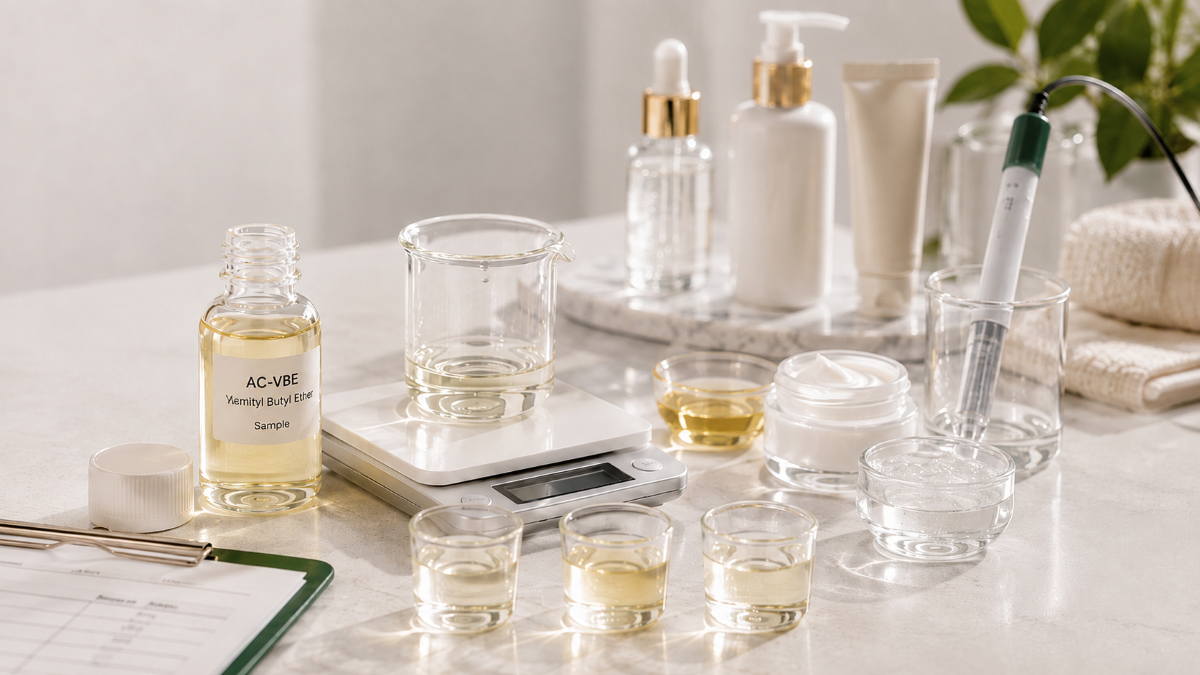
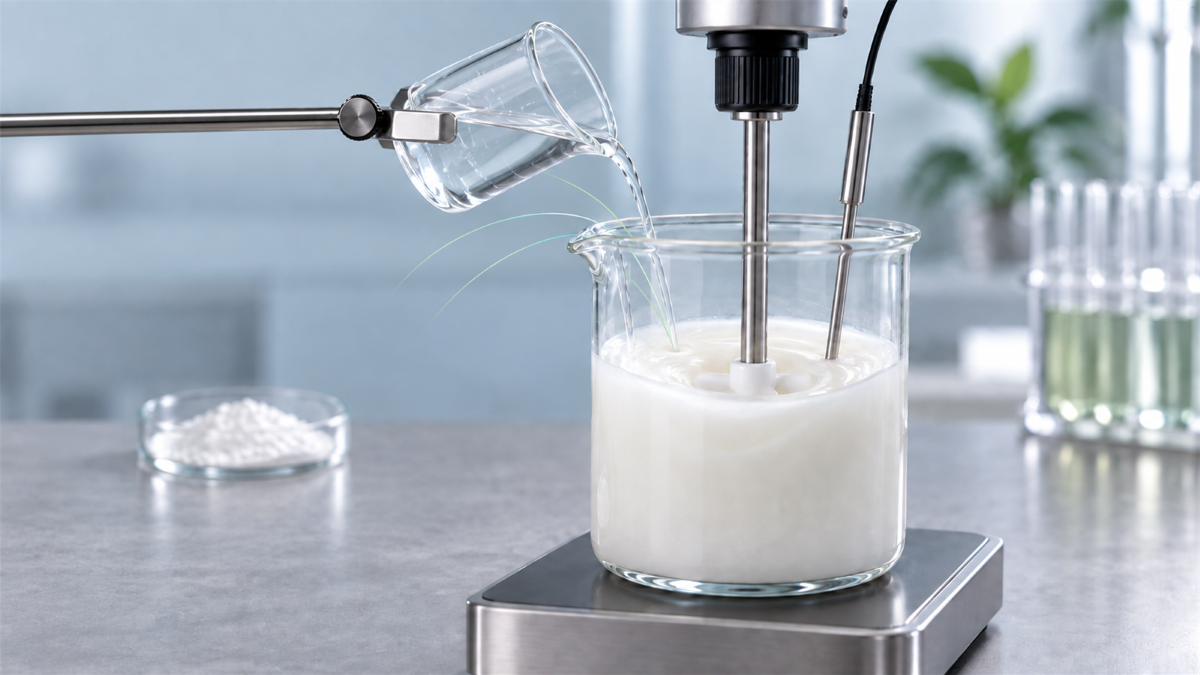
Water-soluble HA still needs controlled hydration in the vessel. Check the grade-specific technical guidance before choosing direct addition or pre-dispersion. During bench trials, watch for floating clumps or “fish eyes”; these often indicate uneven wetting or unsuitable addition order rather than an incorrect molecular weight. Record viscosity only after full hydration, then repeat the measurement after the same defined hold period for each sample so incomplete hydration is not mistaken for a grade effect. After stability exposure, compare viscosity drift and any increase in ropiness or stringiness with the initial batch.
Choosing a Grade for Real Product Briefs
The AC-HA range uses the INCI name Sodium Hyaluronate and is produced through biological fermentation. It covers 10 kDa to 2.5 MDa, supports customized molecular weight ranges, and is supplied as water-soluble powder or granules. Listed purity is above 93%, with a pH range of 6.0–7.5.
Product brief
Initial AC-HA Grade to Test
Pass signals
Reconsider or adjust when
Fast-absorbing serum or essence
AC-HA(10-100KDa) or AC-HA(100-1000KDa)
The formula reaches the target flow, breaks cleanly from a pipette, remains clear when clarity is required, and dries down with controlled tack
The base remains too thin after full hydration, leaves persistent tack, or draws long threads during dispensing
Sheet mask or gel cream
AC-HA(100-1000KDa) or AC-HA(1.5-2.0MDa)
The essence wets the substrate evenly or the gel picks up cleanly, with enough cling and limited residue
Dosing becomes ropy, the substrate wets unevenly, or the dried film pills during rubbing
Rich cream or overnight mask
AC-HA(1.5-2.0MDa) or AC-HA(2.0-2.5MDa)
The product gains cushion and a noticeable moisture film while spreading evenly and dispensing cleanly
Stringiness interferes with filling or pumping, the film feels heavy, or the formula pills during application
Multi-weight hydrating serum
A lower or intermediate grade plus a high molecular weight grade
The blend adds a useful surface film while retaining the target flow and dry-down of the base
The added molecular-weight grade mainly increases tack, ropiness, or viscosity without delivering a clear improvement over the single-grade control.
Keep the base formula unchanged during the initial screen and alter one HA variable at a time. A higher molecular weight grade earns its place when the added film or cushion improves the product more than it increases tack, ropiness, or packaging resistance. A multi-weight system should also outperform the simpler single-grade control in a result that can be felt, measured, or observed.
Building a Moisturizing System Beyond HA
Companion ingredients change what HA still needs to contribute. A formula with enough body and emollience can use low- or intermediate-molecular-weight AC-HA to preserve a lighter finish. Where surface film and cushion are still lacking, a higher-molecular-weight grade offers a stronger starting point.
A barrier-care lotion benefits from higher-molecular-weight AC-HA when immediate comfort and a fuller moisture film are priorities. Ceramide Series covers the lipid-barrier role that HA cannot provide. If the lotion also needs to remain fluid or layer cleanly beneath sunscreen, moving toward an intermediate molecular weight can reduce excess build while retaining hydration. In a 14-person study of a cream containing 3% AC-Ceramide SANIO 1236, cheek water loss fell 23.18%, cheek gloss rose 36.70%, and R5 elasticity rose 29.15% at week four. Source: ANECO Ceramide Series product data.
Lightweight lotions and gel creams call for tighter control of pumpability, spread, and dry-down. Low- or intermediate-molecular-weight AC-HA leaves more room to tune these properties, while BioSyn-Squalane adds glide and softness through the oil phase. A prototype that feels too thin should generally be moved toward the intermediate range before testing 1.5–2.5 MDa grades.
Oily-skin hydrating gels have less tolerance for residue and tack. Pairing low- or intermediate-molecular-weight AC-HA with AC-ZPCA helps maintain clarity and a lighter finish while adding sebum-care and water-oil balance. A higher-molecular-weight grade becomes relevant only when extra cling or surface film is a deliberate part of the brief, and the added tack remains acceptable.
What to Check Before Selecting an AC-HA Grade
Selection starts with the role HA must play in the finished formula, then moves into a practical prototype checklist. Confirm whether viscosity is mainly built by HA or by carbomer or another rheology modifier. When a low- or intermediate-molecular-weight grade leaves more room to adjust flow, spread, and dry-down, verify that the final texture still has enough body. When the brief calls for a stronger moisture film or a cushioned after-feel, a higher molecular weight grade becomes more relevant; stringiness, tack, pilling, viscosity recovery, and filling behavior should be checked before scale-up.
Packaging can also rule out an otherwise suitable grade. A pipette serum needs clean break-off without long strings, a pump cream must recover quickly after dispensing, and a sheet-mask essence should spread evenly through the substrate without becoming ropy.
For technical approval, the stated kDa range, analytical method, permitted batch range, and batch COA carry more value than an LMW or HMW label. These details should be reviewed alongside the formula trial, since the INCI name alone cannot predict filling behavior, application feel, or stability.
Frequently Asked Questions
What is considered low molecular weight hyaluronic acid?
There is no universal cutoff. Use the actual kDa range. Within the AC-HA range, AC-HA(10-100KDa) is the clearly defined low molecular weight option, while AC-HA(100-1000KDa) covers a wider intermediate range.
Is low molecular weight hyaluronic acid better for skin?
It offers greater penetration potential and fits many lightweight products. High molecular weight HA provides surface hydration, film formation, and cushion. The product brief decides which benefit has greater value.
Can low molecular weight HA reach the dermis?
Smaller HA chains have shown better passage through the stratum corneum, including the 20–300 kDa range in a human-skin study. A dermal-delivery claim should be used only after testing the finished formula at that depth.
Is low molecular weight HA more irritating?
Molecular weight alone does not decide finished-product tolerance. For sensitive-skin briefs, a practical starting point is higher molecular weight surface hydration with the Ceramide Series, followed by assessment of the complete formula’s comfort and stability.
Can high and low molecular weight HA be used together?
Yes. Multi-weight systems are useful when each grade has a separate role, such as broader hydration and surface feel. Total polymer load still needs sensory and stability evaluation.
Select the HA Grade by Prototype Performance
The useful question is not whether low- or high-molecular-weight HA is better in isolation, but whether the selected grade gives the prototype the intended hydration profile, skin feel, and processing behavior. With AC-HA spanning 10 kDa to 2.5 MDa, lower-, intermediate-, and higher-molecular-weight options can be compared in the same base for viscosity, unwanted thinning, tack, pilling, dispensing, and dry-down before a final grade is chosen, rather than selected from an LMW or HMW label alone.
Send us your formulation brief through Contact Us, including the product format, target viscosity and after-feel, pH, process temperature, electrolyte load, packaging type, and intended claim. Request the relevant AC-HA samples together with the TDS, SDS, specification, or batch COA needed for bench evaluation.
By clicking "Accept," you agree to the storing of cookies on your device to enhance site navigation, analyze site usage, and assist in our marketing efforts.