What Is Vanillyl Butyl Ether? Warming Mechanism, Applications, and Formulation Guide
Date:October. 16 2026
share:
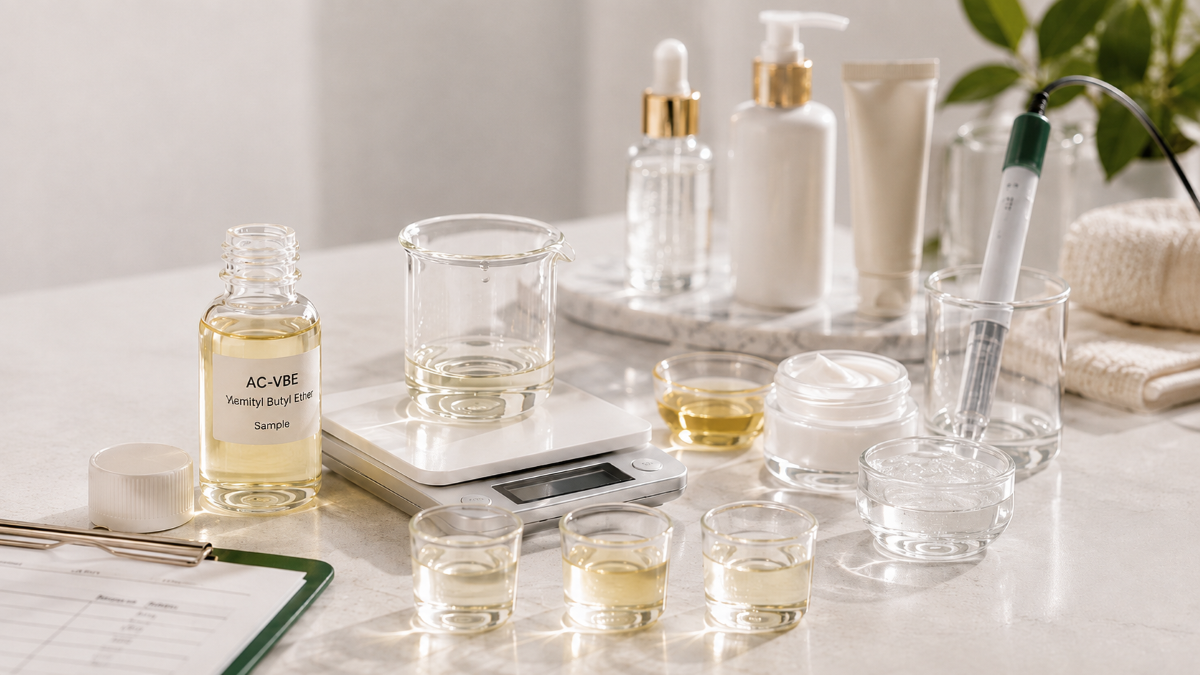
Vanillyl Butyl Ether, commonly shortened to VBE, is an oil-soluble thermo-sensory ingredient used to create a warming sensation in personal care formulas. It interacts with the TRPV1 sensory pathway, producing a heat-like signal without functioning as a conventional heating material. At ANECO, we supply AC-VBE with an assay of at least 98% and recommend an initial formulation screening range of 0.05%–0.5%. Noticeable warmth can begin in about two minutes and may last for several hours, although the exact onset and persistence vary with dosage, vehicle, and test conditions. Application area, contact time, package output, and the rest of the formula all shape the warming curve delivered by the finished product.
What Is Vanillyl Butyl Ether?
Vanillyl Butyl Ether is a chemically defined warming ingredient with the INCI name Vanillyl Butyl Ether and CAS No. 82654-98-6. It is separate from vanillin, vanilla extract, and capsaicin. Vanillin is used mainly for its vanilla-like odor and flavor, while VBE is selected for a thermo-sensory effect.
Our AC-VBE is supplied as a colorless to pale yellow liquid with a mild characteristic vanillin odor. It is oil-soluble and has an assay of at least 98%. These details matter in clear oils, pale emulsions, and fragrance-sensitive products, where raw-material color or odor can affect the finished concept.
Property
AC-VBE Data
INCI name
Vanillyl Butyl Ether
CAS number
82654-98-6
Appearance
Colorless to pale yellow liquid
Odor
Mild characteristic vanillin odor
Assay
≥98%
Solubility
Oil soluble
Recommended trial range
0.05%-0.5%
Treat 0.05%-0.5% as a screening window, not a fixed recipe. A body wash, massage oil, lip product, and facial mask expose the skin in different ways, so the same percentage can produce very different results.
How Does Vanillyl Butyl Ether Create a Warming Sensation?
The warming response is linked to transient receptor potential vanilloid 1, or TRPV1. This ion channel takes part in the way sensory nerves respond to heat and capsaicin. When VBE interacts with the pathway, calcium signaling changes in sensory cells and contributes to a feeling of warmth.
A 2022 laboratory study tested several vanilloid analogues in HEK293 cells expressing mouse TRPV1. VBE increased intracellular calcium in a concentration-dependent manner, while mutations at capsaicin-sensing sites reduced the VBE response. These findings support an interaction between VBE and the TRPV1 pathway.
This cell-based evidence helps explain the receptor-level warming signal, but it does not predict the onset, intensity, duration, or comfort of a finished cosmetic. For formulators, the practical question is how that response translates into a comfortable, repeatable experience in the final product.
Why the Same VBE Level Feels Different Across Formulas
Put the same VBE level into a massage oil and a body wash, and the two products will not feel alike. The oil stays on the skin, spreads during rubbing, and may be dispensed by a pump or dropper. The body wash is diluted on wet skin and rinsed away within minutes. The percentage is identical; the exposure is not.
Carrier choice affects how VBE is held and released. Spreadability changes the treated area. Massage and occlusion can intensify contact, while a pump, tube, stick, or dropper changes the amount delivered in one use. Surfactants, polymers, fragrance, and cooling agents can shift the timing or character of the sensation.
A 6-Point Warming Profile Check
1. Onset - When does warmth first become noticeable?
2. Peak - How strong does it feel at its highest point?
3. Evenness - Is the warmth uniform, or are there isolated hot spots?
4. Duration - How long does the intended sensation remain?
5. Fade - Does it taper off comfortably?
6. Repeat-use comfort - Does the experience change after several applications?
Keep product mass, treated area, rub-in time, room conditions, and scoring intervals consistent between prototypes. This makes it easier to see whether a change comes from VBE concentration, the vehicle, or the delivery method.
Vanillyl Butyl Ether Uses by Product Format
AC-VBE can be evaluated in warming body creams, massage oils, body lotions, facial masks, cleansers, soaps, lip care, and selected hair or scalp sensory products. The right format is shaped by how long the formula remains on the skin, how widely it spreads, and how much is applied.
Product format
Sensory goal
Main formulation concern
Massage cream or oil
Noticeable warmth during massage
Amount applied, massage time, spread area, and peak warmth
Body lotion or emulsion
Even warmth over a larger area
Spreadability and comfort after repeated use
Cleanser or soap
A short warming cue during washing
Dilution on wet skin, rinse time, and after-rinse feel
Facial mask
Controlled warmth during wear
Wear time, occlusion, and migration toward the eye area
Lip care
Localized warmth or a hot-cold effect
Amount per swipe and movement beyond the lip line
Hair or scalp product
A warming cue during scalp care
Leave-on or rinse-off use, application pattern, and rinse path
A hot-cold concept is a time sequence: which sensation arrives first, whether the peaks overlap, and how each one fades. For AC-VBE, we suggest screening menthol or other cooling agents as part of the complete sensory system. Published work with menthol shows why the ratio matters. In a small human sensory study using 0.1 wt% VBE, 0.1 wt% menthol did not reduce VBE-induced sensory irritation, while 0.3 wt% menthol did during a 10-minute assessment. Menthol and menthyl lactate are different ingredients, so the study does not provide a ready-made pairing ratio for AC-VBE. Its practical value is the broader formulation lesson: the balance only becomes clear when the complete blend is assessed over time.
Vanillyl Butyl Ether Dosage: A Practical Formulation Workflow
Vanillyl Butyl Ether dosage should be developed as a controlled screening process, not chosen from a single target percentage. For AC-VBE, start within the recommended 0.05%-0.5% trial range and build a small concentration ladder. Keep the base formula, amount applied, treated area, and rating schedule the same across all samples. Three or four well-spaced prototypes usually give formulators a clearer sensory window than one trial followed by large corrections.
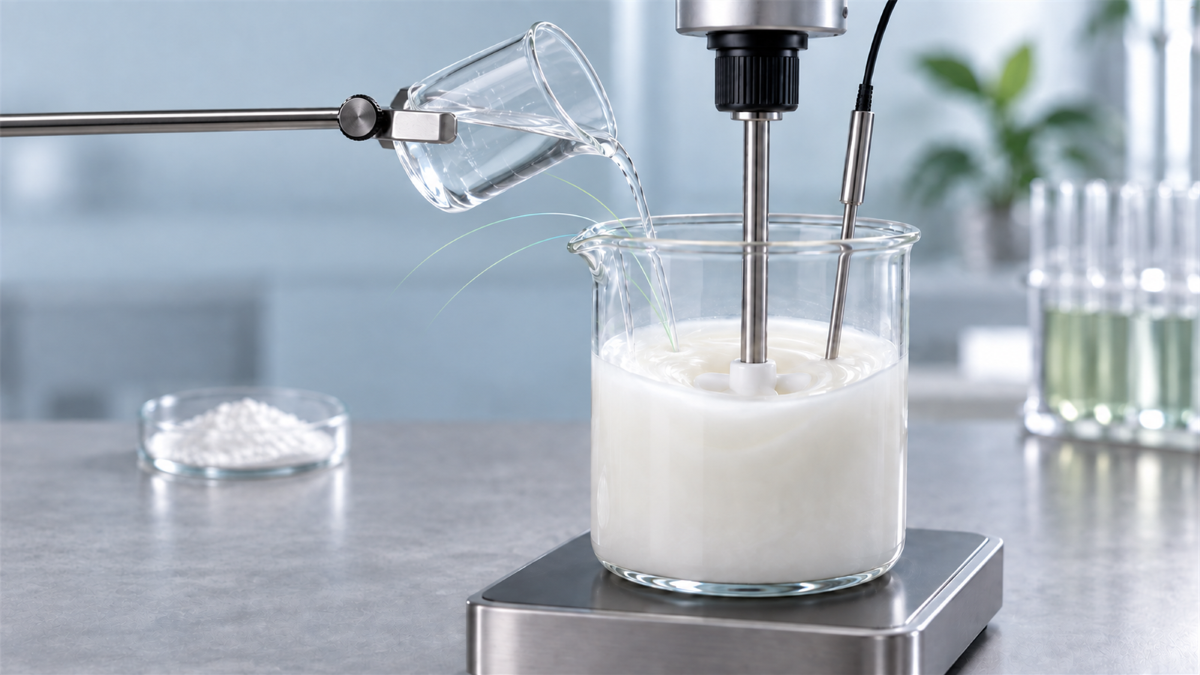
After the first promising level appears, move into formulation compatibility work. Because AC-VBE is oil-soluble, pre-disperse it in a compatible oil phase or carrier before full batching. Check clarity and odor at this stage, but do not make the final sensory decision until the complete formula includes its actual emulsifier, surfactant, polymer, fragrance, and cooling system. These ingredients can change how quickly warmth appears, how strong it feels, and how evenly it spreads.
Once the complete formula is in place, move the most promising prototype into finished-formula validation. Use pH 6.0–6.5 as AC-VBE’s initial screening range, then confirm both stability and sensory performance in the final system. Run heat–cool and freeze–thaw cycles, repeat the warming-profile screen, and evaluate the intended package. A pump, dropper, or stick can change the amount delivered per use even when the bulk formula remains unchanged.
For scale-up, combine sensory testing with analytical checks when needed. Published HPLC work shows that VBE can be measured in complex cosmetic matrices containing oils, fats, and waxes. This supports quantitative verification when visual clarity alone cannot confirm concentration or batch uniformity. Our quality-control facilities include HPLC for testing raw materials, intermediates, and finished products.
Vanillyl Butyl Ether vs Capsicum- and Ginger-Based Warming Materials
Compared with capsicum- or ginger-based warming materials, Vanillyl Butyl Ether gives formulators a more defined starting point. AC-VBE has a specified chemical identity, oil solubility, a colorless to pale yellow appearance, and a mild characteristic vanillin odor. These properties can make it easier to work in clear massage oils, pale emulsions, lip care, and formulas where fragrance balance matters.
Capsicum- and ginger-based materials may suit concepts that want a more botanical or extract-driven story, but they usually require separate checks for color, odor, sensory intensity, and fit with the finished product concept. AC-VBE can be a practical choice when the formulation calls for low color, mild odor, and a warming curve that can be adjusted through dosage and vehicle selection.
How to Compare Vanillyl Butyl Ether Grades
When comparing Vanillyl Butyl Ether grades, do not start and stop at assay. First confirm identity, then compare appearance, odor, oil solubility, related-substance controls, residual-solvent information, analytical method, storage conditions, packaging, lot consistency, and recent COA results. A grade with a high assay can still create problems if its color, odor, impurity profile, or batch variation does not fit the finished formula.
For clear oils, pale emulsions, lip care, and fragrance-sensitive formulas, grade comparison should go beyond the assay value. Start with the details that affect the finished product directly: color, odor, clarity in the intended base, and the sensory profile delivered by the final package. Then review the current COA against the specification, including assay, related substances, residual-solvent information, and recent batch results.
We produce AC-VBE through a direct one-step reaction with butanol to reduce impurities compared with conventional two-step processing. For buyers, this makes impurity control something to verify through documents and sample testing, not just a manufacturing statement.
Common Formulation Mistakes to Avoid
One of the quickest ways to lose control of a warming formula is to begin near the top of the trial range and work downward. Starting lower makes the comfortable window easier to identify. Another common mistake is carrying body-care results directly into lip, facial, or scalp products, where the application area and sensory threshold are different.
Finalize the fragrance, surfactant, polymer, and cooling system before signing off the warming curve. For example, a lotion may feel balanced at a controlled bench dose, then feel too strong when a high-output pump delivers more product in normal use. Evaluate the intended package early, use cooling agents to shape the sensory sequence rather than compensate for an excessive VBE level, and remember that clear appearance alone does not confirm uniform distribution.
Frequently Asked Questions
Is Vanillyl Butyl Ether the same as vanillin?
No. They are separate chemical ingredients. Vanillin is associated mainly with vanilla odor and flavor, while VBE is used to create a thermo-sensory warming effect in personal care products.
How much Vanillyl Butyl Ether should be used?
For AC-VBE, 0.05%-0.5% is the recommended trial range. The most suitable level comes from a controlled screen using the intended base, application amount, treated area, and package.
Is Vanillyl Butyl Ether oil soluble?
Yes. AC-VBE is oil soluble and can be pre-dispersed in a compatible oil phase or carrier before it is incorporated into the complete formula.
How quickly does Vanillyl Butyl Ether work?
AC-VBE can produce noticeable warmth in about two minutes, and the sensation may remain for several hours. The exact curve changes with concentration, vehicle, amount applied, and test setup.
Can VBE be combined with menthol or menthyl lactate?
Yes. VBE can be used in layered hot-cold concepts. Menthol and menthyl lactate are different ingredients, so each blend needs its own ratio screen and time-based sensory evaluation.
Conclusion
Vanillyl Butyl Ether is most useful when formulators treat it as a sensory-design ingredient, not a simple warming additive. A useful formula controls onset, peak, evenness, duration, fade, and repeat-use comfort while accounting for the vehicle and package. For AC-VBE evaluation, request a sample with the current TDS, SDS/MSDS, specification, and COA, then test it in the intended formula and delivery format.
By clicking "Accept," you agree to the storing of cookies on your device to enhance site navigation, analyze site usage, and assist in our marketing efforts.