What Is Zinc PCA? Skin Benefits, Oil Control, and Formulation Guide
Date:September. 28 2026
share:
Zinc PCA is zinc pyrrolidone carboxylate, a cosmetic active that pairs zinc with PCA to support oily-skin formulas where sebum care, hydration, and comfort need to work together. An oily-skin serum can look crystal clear in an early bench sample, then turn hazy once polymers, salts, acids, or extracts enter the system. A powder-heavy mattifying formula can take down shine quickly, but still leave skin feeling tight by midafternoon. Zinc PCA fits briefs that need more than a quick matte effect: less visible shine, moisture support, and a comfortable daily finish
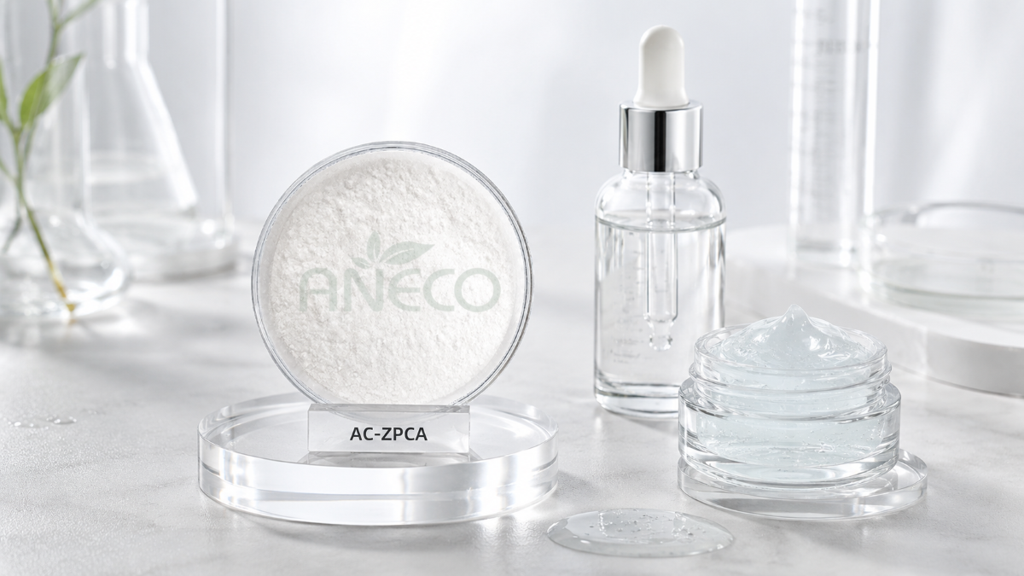
For this kind of oily-skin formula, ANECO’s AC-ZPCA gives formulators a practical Zinc PCA grade with defined use guidance and a clear incorporation route. The sections below explain how Zinc PCA works, which formats suit it best, and what cosmetic claims a finished formula can credibly support.
Zinc PCA Definition and Ingredient Role
Chemically, Zinc PCA is zinc pyrrolidone carboxylate, a zinc salt of pyrrolidone carboxylic acid. Zinc ions are relevant to oily-skin care, while PCA contributes moisture-related and skin-conditioning value. COSMILE Europe lists Zinc PCA as a humectant and skin-conditioning ingredient, supporting its use in products that aim to manage oil while maintaining a comfortable skin feel.
PCA is also recognized as a component of the skin’s natural moisturizing factor. This helps explain why Zinc PCA is better understood as a balancing active than as a harsh degreasing material. It is suited to formulas developed around excess sebum, visible shine, blemish-prone skin, and hydration support.
Zinc PCA is different from zinc oxide. Zinc oxide is an inorganic powder used for separate formulation purposes, including regulated sunscreen applications in relevant markets. AC-ZPCA, by contrast, is a cosmetic active that can be pre-dissolved in water as part of its recommended incorporation process; it cannot replace zinc oxide in a sunscreen formula.
What Zinc PCA Adds Beyond a Matte Finish
A quick matte finish can make an oily-skin formula look impressive at first swipe, then lose the plot if the skin feels tight by midafternoon. Zinc PCA earns its place when the brief is bigger than "less shine": a cleaner-feeling daily product for oily, blemish-prone, or dehydrated-oily skin.
The zinc side of the molecule gives the sebum-care story a credible starting point. A published in-vitro study reported that zinc ions inhibited 5α-reductase activity in human skin, an enzyme associated with androgen-driven sebum biology. That is useful mechanistic support, not a shortcut to a finished-product claim such as a measured sebum-reduction percentage.
AC-ZPCA gives that story a more specific supplier angle. In our Anti-inflammatory & Soothing portfolio, it is positioned as a "SMART OIL CONTROL SHIELD" for oily skin: not just a surface mattifier, but a Zinc PCA active built around 5α-reductase-related sebum care, support for inhibiting Cutibacterium acnes growth, water-oil balance, and moisture retention through PCA and zinc ions.
That mix is the practical distinction for formulators. A powder can take down visible oil quickly; an exfoliant can deal with surface buildup. This grade belongs where the brand wants oil control to feel more like daily skin care: less visible shine, a fresher finish, blemish-prone support, hydration, comfort, and a smoother-looking pore story without sounding aggressive.
When Should a Formulator Choose Zinc PCA?
Start with the job the product has to do. Zinc PCA is most useful when the brief asks for daily oil management, a less greasy finish, blemish-prone positioning, and more comfort than an aggressive degreasing concept can offer.
Formulation objective
Ingredient direction
Role of Zinc PCA
Reduce shine with a comfortable after-feel
Zinc PCA
Core oil-balance and hydration active
Create an immediate matte finish
Absorbent powders or sensory modifiers
Adds care value beyond instant oil absorption
Address clogged pores and surface buildup
Salicylic acid
Complements sebum care without replacing exfoliation
Combine oil care with barrier or tone benefits
Niacinamide
Adds a complementary oil-balance pathway
Provide UV protection
Zinc oxide
Serves a different function
The “SMART OIL CONTROL SHIELD” positioning is strongest when it is tied to a clear formulation role. Oil absorption is only part of the story; the stronger angle is sebum care, hydration, and daily comfort together. Finished-product testing is still needed before any measurable performance claim.
How AC-ZPCA Fits Different Product Formats
AC-ZPCA fits best in daily oily-skin products where oil-balance support and moisture retention need to work together. Its role changes by format: it can support the core positioning of a leave-on serum or gel cream, while serving as a secondary care cue in a rinse-off cleanser.
Clear Serum or Balancing Toner
Clear serums and balancing toners are a strong fit for daily oily-skin care because they layer easily under moisturizer, sunscreen, or makeup. Clarity needs extra attention in these formats, especially when the formula also contains polymers, salts, acids, niacinamide, or botanical extracts. Dissolving AC-ZPCA completely in water first makes any haze that appears later easier to troubleshoot.
Oil-Control Gel Cream
A gel cream is well suited to oily-skin formulas that need both oil-care positioning and a comfortable, moisturized after-feel. Rather than relying only on absorbent powders or dry-touch sensory modifiers, formulators can use Zinc PCA alongside the broader moisturizing system to support oil care, PCA-linked moisture retention, and water-oil balance in a daily leave-on product.
This format can be particularly relevant for combination or dehydrated-oily skin, where an exclusively mattifying or degreasing concept may not adequately address tightness and comfort. The product language can move toward balanced-looking skin, a fresher finish, comfort, and refined pore appearance, which is closer to the active's role than promising structural pore change.
Clarifying Cleanser
In a cleanser, the active should not try to be the main event. The surfactant system does the washing; it adds a care cue for oily or blemish-prone skin, especially when the brief needs to avoid a stripped-skin message. Its fit within an Anti-inflammatory & Soothing portfolio helps shape that softer clarifying story, but rinse-off contact time still calls for restraint. If salicylic acid is present, let it own exfoliation and clogged-pore language. The ingredient can sit beside it as oil-balance, moisture-retention, and comfort support. That division of labor feels more credible to formulators and more natural to overseas readers.
How to Formulate with Zinc PCA
Supplier guidance should outrank general online ranges. For AC-ZPCA, our recommended range is 0.1%–1.0% in finished systems with pH 5.0-6.0
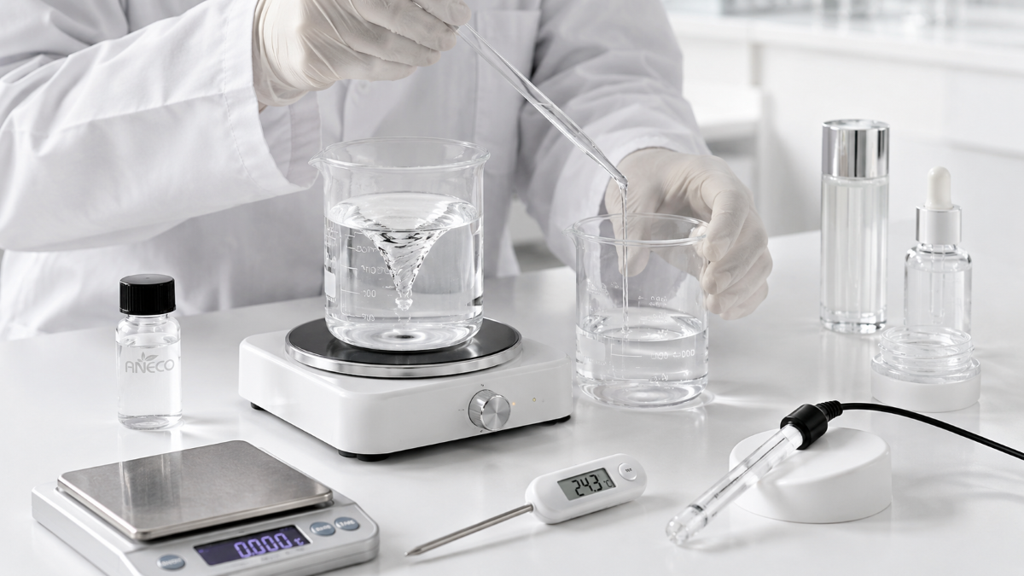
Pre-dissolve AC-ZPCA in water before combining it with the other phases. Use approximately 10 parts water to 1 part of the material by weight and stir until fully dissolved. Gentle heating can be used where needed, with the temperature kept at or below 45°C. Allow the solution to cool to room temperature before adding it to the remaining phases.
Confirm dissolution in the premix before adding surfactants, emulsifiers, rheology modifiers, acids, extracts, salts, or other active ingredients. Once the full system changes appearance or viscosity, incomplete dissolution is harder to troubleshoot.
Choose the final level according to product format, contact time, target claim, sensory profile, and the wider active system. A leave-on serum and a rinse-off cleanser create different exposure conditions. Higher use levels do not automatically translate into stronger consumer results, so sensory performance, skin tolerance, stability, and claim substantiation still need finished-product evaluation.
Measure final pH after every phase and pH adjuster has been incorporated. A premix may sit within the recommended range while the completed formula moves outside it. Track pH during stability testing as well, since drift can affect appearance, viscosity, and product quality.
Scale-Up Notes for Real Formulas
The water premix tells you whether the active has gone into solution; the finished formula tells you whether the system can carry it cleanly. As the project moves from bench sample to pilot batch, look at clarity after addition, undissolved material, crystallization, sediment, pH movement, viscosity change, odor, and phase behavior in the actual package.
Acids, electrolytes, chelators, surfactants, and polymeric thickeners are variables to map, not automatic red flags. A small shift in addition order, concentration, pH, or temperature can decide whether a batch stays clear or turns cloudy later.
Run the stability program that fits the format, including room-temperature and elevated-temperature storage, freeze-thaw cycling where it is relevant, and packaging compatibility. The aim is to judge the whole product, not the active in isolation: does it still look, feel, and behave like something the brand can confidently sell?
Frequently Asked Questions
Is Zinc PCA good for oily skin?
Yes. It is commonly selected for formulas targeting excess sebum, visible shine, water–oil imbalance, and blemish-prone skin. Its PCA component also makes the hydration story more credible.
Is Zinc PCA only used for blemish-prone skin?
No. It can also fit products for combination skin, dehydrated oily skin, visible shine, and enlarged-pore appearance when the finished formula is designed for the intended audience.
Can Zinc PCA help with hydration?
Zinc PCA is recognized as a humectant and skin-conditioning ingredient, and PCA is associated with the skin’s natural moisturizing factor. The ingredient can contribute to hydration positioning, while the broader formula should provide complete hydration and barrier care.
Is Zinc PCA the same as zinc oxide?
No. The supplier grade can be pre-dissolved in water as part of its recommended incorporation process. Zinc oxide is an inorganic powder with different formulation roles, including regulated UV-filter applications in relevant markets.
Can Zinc PCA be used with niacinamide or salicylic acid?
These combinations can serve complementary goals. Niacinamide may broaden barrier, tone, and oil-care positioning, while salicylic acid addresses exfoliation and pore buildup. Compatibility, pH, clarity, viscosity, tolerance, and stability must be confirmed in the final formula.
What are the recommended use level and pH for AC-ZPCA?
We recommend 0.1%–1.0% AC-ZPCA in a finished system with a pH of 5.0-6.0
Pre-dissolve it in approximately ten parts water to one part of the material by weight, keep any heating at or below 45°C, and cool the solution before combining it with the other phases.
Conclusion
Zinc PCA is a practical choice when an oily-skin formula needs more than a quick matte finish. It connects sebum care, blemish-prone positioning, moisture retention, and daily comfort in one ingredient story. AC-ZPCA also gives formulators a defined use level, pH range, and incorporation process for development and scale-up. Formulators can contact our team to discuss samples and current technical information.
By clicking "Accept," you agree to the storing of cookies on your device to enhance site navigation, analyze site usage, and assist in our marketing efforts.