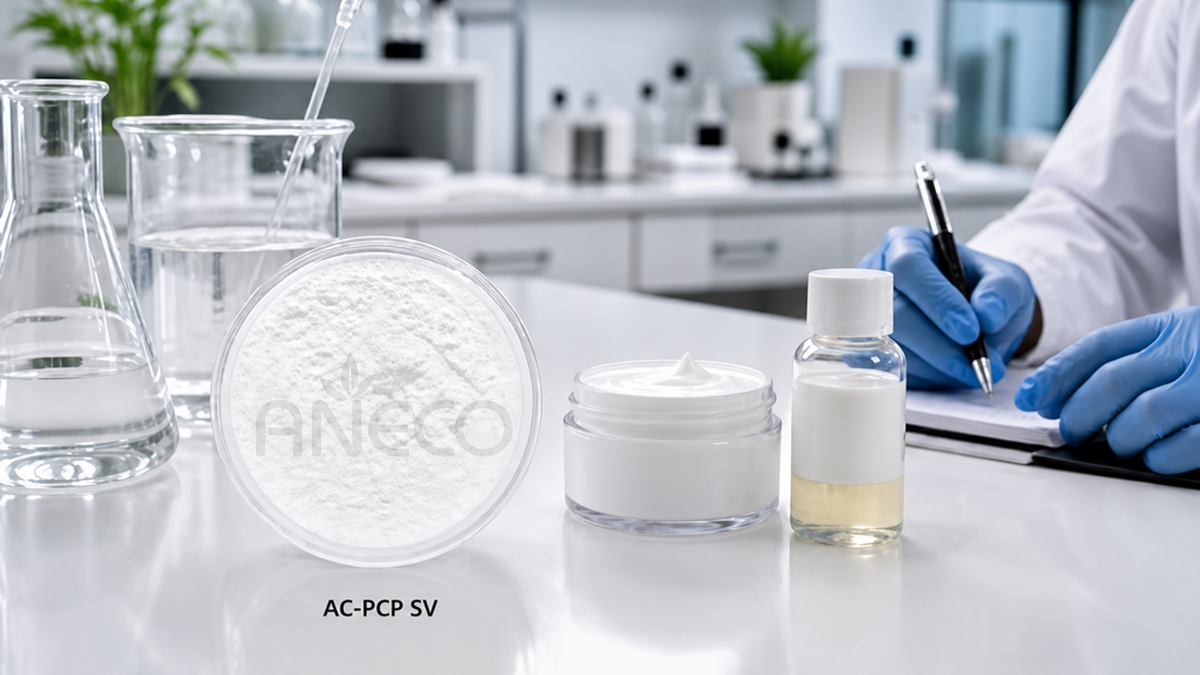
As an anionic O/W emulsifier, Potassium Cetyl Phosphate helps oil-in-water formulas organize the oil-water interface, improve oil-phase control, and support a smoother skin feel.
Formulation teams usually evaluate it when early O/W prototypes show oiling out, pigment or mineral-filter settling, streaking, viscosity drift, grains, or a heavier-than-target rub-out after cooling, storage, filling, or package-contact checks.
Sunscreen emulsions, high-oil creams, foundations, BB creams, tinted sunscreens, and other pigment-rich formulas are common screening areas. The key question is whether the emulsifier system helps the actual prototype meet its texture, stability, processing, and finished-product test targets.
In practice, the need usually appears after early batches are cooled, stored, filled, or checked against packaging. Oil rings, powder drop-out, grains, viscosity drift, streaking, or a heavier-than-target rub-out show that the current emulsifier system may need adjustment before the formula moves into stability and finished-product testing.
Common Formulation Challenges in O/W Systems
Lightweight Emulsions That Separate Too Easily
In a lightweight oil-in-water lotion, the challenge often appears after the beaker stage. A sample may spread well on day one, then show a thin oil ring, small grains, thinning, or a heavier rub-out after cooling, heat storage, or package contact.
In these low-viscosity O/W systems, Potassium Cetyl Phosphate supports the emulsifier system by helping maintain a more uniform oil-water structure. The result is stronger oil-phase control with a lighter sensory profile and less reliance on waxes or fatty alcohols as the main structure builders.
ANECO product information describes AC-PCP SV as an anionic O/W emulsifier with emulsion-stability and smooth-skin-feel positioning. In lightweight lotion projects, this profile is most useful when the team wants stronger oil-phase control without making waxes or fatty alcohols the main source of structure.
Managing Complex Multi-Ingredient O/W Formulas
Multi-ingredient O/W formulas require careful emulsifier selection because oils, UV filters, pigments, and other functional ingredients need to work within the same system.
Formula issue
How it appears
What the team reviews
Phase separation
Oil ring or water release
Emulsifier system and oil phase balance
Powder settling
Pigment or mineral filter drop-out
Dispersion quality and viscosity support
Texture drift
Thicker, thinner, or draggier rub-out
Thickener choice, shear, cooling, and storage
Grains or roughness
Poor appearance or uneven feel
Compatibility, crystallization, and process control
AC-PCP SV is worth screening when a sunscreen, lotion, moisturizer, or color cosmetic prototype combines a demanding oil phase with UV filters, mineral filters, pigments, film formers, or a lighter skin-feel target that the current emulsifier system cannot hold consistently. For the first comparison, keep the oil phase, powder load, thickener system, heating profile, shear, cooling process, pH target, and package-contact condition unchanged, then use the emulsifier system as the main variable.
A public sunscreen cream formulation example from Personal Care Magazine lists Potassium Cetyl Phosphate as the INCI name for a special emulsifier. This type of formulation reference supports its use in sun-care development, but it should not be treated as finished-product performance evidence for SPF, water resistance, long-term stability, or sensory results.
Viscosity and Skin Feel That Drift After Processing or Storage
Viscosity drift affects more than the lab beaker result. It can change pumping, filling, rub-out, pigment suspension, and the way the formula behaves after package contact.
During AC-PCP SV screening, compare the test batch with the control batch at the same checkpoints: after heating, cooling, filling, storage, and package-contact observation. This makes it easier to separate the emulsifier effect from shear, cooling rate, thickener hydration, and storage conditions.
How It Helps Balance Coverage, Oil Load and Skin Feel
More Even Coverage in Sunscreen Systems
Sunscreen emulsions often combine oil-soluble UV filters, emollients, and other functional ingredients that require a stable O/W structure. As an anionic O/W emulsifier, Potassium Cetyl Phosphate is considered in these systems because it can support the oil-water interface and help formulators build a more organized emulsion structure.
In sunscreen prototypes, AC-PCP SV should be compared inside the actual UV-filter and oil-phase system, because filter solubility, inorganic particles, film formers, rheology modifiers, and rub-out can change the emulsion behavior. The review should focus on phase stability, viscosity shift, application feel, and the finished sunscreen tests required for the target market.
Published sunscreen stability research has reported the use of Potassium Cetyl Phosphate in sunscreen matrices containing UV filters and inorganic materials. The reference supports its place in sun care development as application evidence. Final emulsifier selection still comes from the complete formula and finished-sample testing results.
High Oil Content Without a Heavy Finish
High-oil O/W formulas are a strong screening use case for AC-PCP SV. Our AC-PCP SV product data shows that 1% AC-PCP SV emulsified up to 80% oil phase in our tested mixed-oil system. Use this number as a formulation screening reference, not as a universal oil-load promise. For dosage planning, start from the intended role: 0.3-1.0% as a co-emulsifier, or 1.3% and above as a primary emulsifier with suitable support. Then review the oil blend, thickener system, pH, process conditions, and finished-sample stability results in the actual prototype.
After the first stability checks, reduced-wax or reduced-fatty-alcohol trials can show whether the formula keeps enough structure while moving closer to a lighter sensory target. Consistent results would support continued evaluation of AC-PCP SV in the target formula.
Balancing Pigment Load, Spread, and Skin Feel
Foundation, BB cream, tinted sunscreen, and other pigment-rich O/W products require a careful balance between oil phase structure, pigment distribution, and sensory performance. The emulsifier system plays an important role in maintaining a uniform base where pigments, film formers, and rheology modifiers can work effectively.
AC-PCP SV is used as an anionic O/W emulsifier to support this structure. In suitable formulas, it helps formulators develop pigment-rich products with controlled texture, smooth application, and a lighter sensory profile, while remaining part of a complete dispersion and rheology design.
What to Review Before Selecting Potassium Cetyl Phosphate
Ingredient Identity and Documentation
For Potassium Cetyl Phosphate sourcing, R&D, procurement, and regulatory teams typically review INCI name, CAS information, SDS, COA, specification, and processing guidance before moving into sample evaluation. Potassium Cetyl Phosphate identity data also gives teams an external reference point when checking the ingredient name and CAS information. For AC-PCP SV, we provide these documentation materials to support ingredient verification and communication between technical, purchasing, and regulatory teams.
Raw Material Quality Profile
Beyond basic identity, formulators and purchasing teams should separate public product claims from batch-level verification.
Public ANECO information identifies AC-PCP SV as an EO-free anionic O/W emulsifier and gives the recommended use range, processing guidance, NOI 1.0 positioning, and tested high-oil screening reference. Buyers should verify purity profile, impurity limits, byproduct control, and batch consistency against the current AC-PCP SV product page, TDS, specification, SDS, and COA before sample evaluation or supplier qualification.
Product Structure and Technical Support
The same emulsifier behaves differently when the oil phase, thickener system, powders, pH, and processing conditions change. In suitable O/W formulas, liquid-crystalline structures help organize the oil-water interface and support a smoother skin feel.
Our product documentation identifies AC-PCP SV with a Natural Origin Index (NOI) of 1.0 and provides additional raw material information relevant to sourcing evaluation.
For commercial development, we support customers with product documentation, quality communication, sample evaluation, and technical discussions throughout the transition from laboratory testing to supply. For supplier qualification, buyers can review ANECO production and quality-control information to check manufacturing setup, testing capability, laboratory equipment, and quality-control support before sample approval or bulk supply discussions.
Information Needed Before Sample Evaluation
AC-PCP SV evaluation starts with the formula brief alongside the INCI name. Our AC-PCP SV process guidance covers pre-dispersion in either the oil phase or an aqueous solution. For many sample evaluations, we recommend first dispersing AC-PCP SV in hot water to form a milky dispersion, then mixing it with the remaining water-phase ingredients before oil-phase addition, emulsification, and cooling. This guidance supports sample discussion; commercial scale-up still needs formula-specific validation. Before prototype testing, the following information helps us prepare relevant product documents, sample guidance, and technical discussion:
Formula type and target: product category, target market, sensory goal, appearance target, viscosity range, and main issue to solve.
Formula system: oil phase level, UV filter system, pigment or mineral-filter load, film former, emollient blend, thickener system, pH target, electrolyte content, and package-contact condition.
Process plan: planned AC-PCP SV role, heating, pre-dispersion, shear, emulsification, cooling, filling, and any scale-up constraints.
Verification needs: INCI name, CAS information, COA, SDS, specification, planned stability checks, microbiology, preservative efficacy, irritation or tolerance testing, SPF/UVA/UVB or water-resistance testing when relevant, and buyer requirements for impurity control or batch consistency.
After we receive the formula brief, our product specialist can share the AC-PCP SV TDS, SDS, specification, COA sample, and product brochure for review. We can then align on the sample-evaluation focus before the prototype moves into testing.
FAQ
Is It the Same as Cetyl Phosphate?
No. Cetyl Phosphate and Potassium Cetyl Phosphate are related ingredient names, yet they should be checked separately in INCI documentation, supplier specifications, SDS, and regulatory files. For AC-PCP SV, the listed INCI name is Potassium Cetyl Phosphate.
Can This Emulsifier Be Used in Cold Process Formulas?
Our AC-PCP SV process guidance allows pre-dispersion in either the oil phase or an aqueous solution. For many sample evaluations, we recommend hot-water pre-dispersion to form a milky dispersion before mixing with the remaining water-phase ingredients, then adding the oil phase, emulsifying, and cooling. Cold-process use would need separate lab validation before commercial use.
Does It Make a Formula Phosphate Free?
The ingredient name contains phosphate. A formula using Potassium Cetyl Phosphate should not be described as phosphate free. Claims around cleaner formulation should stay tied to supported attributes such as ethylene oxide-free positioning, low dipotassium hydrogen phosphate content, and no KCl byproduct for AC-PCP SV.
What Formulas Is Potassium Cetyl Phosphate Commonly Considered For?
Potassium Cetyl Phosphate is commonly considered in oil-in-water systems where formulators need emulsification support, balanced texture, and a lighter sensory profile. Typical development areas include sunscreen emulsions, high-oil creams, tinted products, and daily moisturizers. The final emulsifier choice comes from the complete formula, processing conditions, and performance targets.
What Testing Is Needed Before Commercial Product Launch?
Before launch, the test plan should match the product category, target market, and product claims. The CIR safety assessment concluded that alkyl phosphates are safe in cosmetics under current practices of use and concentration when formulated to be non-irritating. As a baseline, teams usually confirm formula stability, preservative efficacy, microbiology, package compatibility, and skin or eye-area tolerance where relevant. Sunscreen formulas add SPF, UVA/UVB or broad-spectrum testing and water-resistance testing when claimed. Pigment-rich products such as foundation, BB cream, and tinted sunscreen need extra checks for pigment dispersion, shade stability, coverage, streaking, and transfer. Daily moisturizers and high-oil creams usually need closer review of viscosity drift, rub-out, and sensory profile.
Conclusion
Potassium Cetyl Phosphate is used in O/W formulas where oils, UV-filter-containing phases, or particulate ingredients make texture and storage performance harder to control.
For AC-PCP SV, the main evaluation points are ethylene oxide-free positioning, high monoester content, byproduct control, Natural Origin Index (NOI) 1.0, recommended dosage by role, and heated-process guidance.
Share the target formula type, oil phase level, UV filter or pigment system, and current stability issue with our team when a sunscreen, color cosmetic, or high-oil O/W formula shows oiling out, pigment streaking, viscosity drift, or a heavier-than-target skin feel during screening. We can support the next step with AC-PCP SV sample screening, COA, SDS, product specification review, and technical consultation.
By clicking "Accept," you agree to the storing of cookies on your device to enhance site navigation, analyze site usage, and assist in our marketing efforts.