Glycolic Acid vs Salicylic Acid: A Formulator’s Guide to Selecting the Right Exfoliating Active
Date:July. 29 2026
share:
Introduction: Choosing the Right Acid for Cosmetic Development
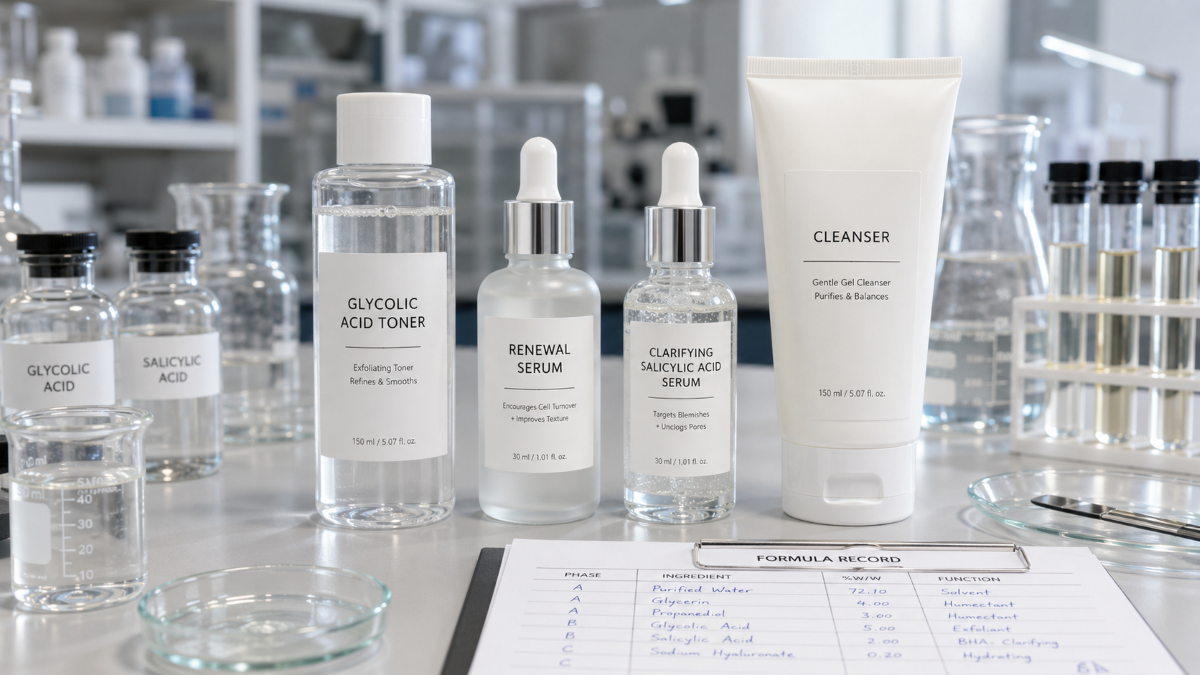
Glycolic acid and salicylic acid are two of the most commonly considered exfoliating actives in skincare formulation. However, choosing between them is not just about choosing an AHA or a BHA. In a clear toner or lightweight serum, salicylic acid may look fully dissolved after batching, but it can later develop haze or crystals during temperature cycling if the solvent system is not well designed. A low-pH glycolic acid serum presents a different challenge: the formula must balance renewal positioning with pH control, ingredient compatibility, and skin tolerance. That is why acid selection should start with the product objective and formula architecture, rather than ingredient popularity.
Glycolic Acid vs Salicylic Acid: Formulation Selection Matrix
Decision Factor
Choose Glycolic Acid When...
Choose Salicylic Acid When...
Key Formulation Risk
Product objective
The formula targets radiance, renewal, uneven tone, or rough texture
The formula targets oil control, pore care, or blemish-prone skin
Claim direction must match product category and market rules
Solubility system
A water-based toner, serum, peel, or body product is preferred
The system can support solvent or solubilization design
Salicylic acid may cause haze, crystallization, or precipitation
pH strategy
The formula can support controlled low-pH development
pH, solvent, and tolerance need to be balanced together
Free acid level affects performance and skin comfort
Product format
Brightening toner, renewal serum, exfoliating body care
Clarifying toner, pore-care serum, cleanser for blemish-prone skin
Leave-on and rinse-off products require different testing logic
Stability focus
Monitor pH drift, viscosity, compatibility, and tolerance
Monitor clarity, crystallization, solvent compatibility, and storage behavior
Stability testing should begin early, not after scale-up
In practice, glycolic acid is usually easier to incorporate into water-based systems because of its water solubility. The main development considerations are controlling acid level, adjusting pH correctly, maintaining compatibility with other actives, and achieving a comfortable skin feel.
Salicylic acid requires a different development approach. The primary challenge is not only dissolving the ingredient during manufacturing but maintaining a stable system throughout storage, transportation, and consumer use.
For this reason, the choice between glycolic acid and salicylic acid should begin with the product objective and formula architecture, not ingredient popularity.
Glycolic Acid Development: From Raw Material Selection to Prototype Screening
Glycolic acid is one of the most widely used AHAs in cosmetic formulation. Its small molecular structure and water-soluble characteristics make it suitable for products focused on visible renewal, smoother texture, and improved radiance.
A low-pH glycolic acid toner, for example, is typically designed around controlled exfoliation and surface refinement. A leave-on renewal serum requires additional attention because the active remains on the skin for a longer period and the formula must balance performance with tolerance.
For formulation teams working on renewal-focused skincare systems, our AC-GLA Glycolic Acid offers consistent quality and flexible type choices for different development needs. Available in AC-GLA 70% and AC-GLA 99% specifications, it provides different pathways for formulation development.
AC-GLA 70% vs AC-GLA 99%: Selecting the Right Type
The choice between AC-GLA 70% and AC-GLA 99% depends on the formulation system, water balance, and processing requirements. AC-GLA 70% is often preferred for water-rich products such as transparent toners and serums, while AC-GLA 99% is more suitable for low-water or concentrated systems where formulators need tighter control over water input, final glycolic acid level, and pH.
Type
Typical Development Scenario
Main Advantage
AC-GLA 70%
Water-based toners, serums, exfoliating liquids
Easier handling in aqueous systems
AC-GLA 99%
Concentrated formulas and low-water systems
Greater control over active input and water balance
For a first prototype of a water-based toner or serum, formulators usually evaluate whether the formula already has enough water phase flexibility. In these systems, AC-GLA 70% can simplify processing because the raw material is supplied in an aqueous form.
For concentrated treatments or formulas where water content requires tighter control, AC-GLA 99% offers greater flexibility, allowing formulators to manage active loading and formula composition more precisely.
In practical development, the selection often depends on the final product concept. A standard exfoliating toner may prioritize processing convenience, while a concentrated renewal treatment may require greater control over active concentration.
Prototype Screening Notes for Glycolic Acid Systems
During early glycolic acid prototype development, the key question is not only whether the ingredient can be added successfully. The more important question is how the entire formula behaves after incorporation.
During prototype screening, formulation teams typically monitor pH drift, viscosity change, color variation, odor, clarity, and compatibility with supporting actives under room-temperature, elevated-temperature, freeze-thaw, and light-exposure conditions.
For example, when glycolic acid is combined with brightening ingredients such as alpha-arbutin or vitamin C derivatives, compatibility testing becomes important because different actives may influence formula stability.
The objective of the first screening stage is to establish a stable system before moving into optimization, scale-up, or packaging evaluation.
Understanding Glycolic Acid Technical Data
In-vitro data, application notes, and technical dossiers related to glycolic acid performance provide useful references for ingredient positioning and formulation development. These materials support raw material evaluation and prototype design, while finished-product claims should be validated through complete formula testing and appropriate claim-support studies.
Our AC-GLA technical dossier includes ingredient-level evaluation data on renewal-associated markers, including Type I collagen mRNA expression and hyaluronic acid-related indicators. To interpret these results accurately, formulators can review the related study conditions and source notes in the dossier, such as the test model, concentration, control, and applicable claim-support context.
For this reason, the technical dossier should be used as a formulation reference rather than a direct substitute for finished-product efficacy testing.
Technical Information
Formulation Interpretation
Renewal-related markers
Support ingredient positioning for cosmetic development
Hyaluronic acid-related indicators
Provide hydration-related formulation insights
Test conditions
Needed to understand concentration, pH, model, and exposure time
Final product claims depend on the complete formulation, including active concentration, delivery system, testing protocol, and regulatory requirements.
If you need detailed test conditions and claim-support information, request the complete technical dossier.
Salicylic Acid Development: Solubility Screening and Stability Control
Salicylic acid provides a different formulation pathway because of its oil-soluble characteristics.
As a BHA, salicylic acid is commonly used in pore-focused, oily skin, and blemish-prone product concepts. However, the main development challenge is managing solubility and long-term stability.
Unlike glycolic acid, salicylic acid has limited water solubility. This becomes especially important in transparent gels, lightweight serums, and clear toners where even small amounts of precipitation can affect product appearance and consumer acceptance.
A formula that appears clear immediately after manufacturing may still develop problems during storage. For this reason, early screening should evaluate whether the solvent system can maintain salicylic acid in a stable state over time.
During development, formulators usually observe changes such as:
clarity variation;
crystal formation;
viscosity changes;
pH drift;
sensory changes.
Salicylic Acid Solubility Screening: Evaluating the Solvent System
Solvent selection is often the first development checkpoint for salicylic acid formulas because limited water solubility can affect formula clarity, stability, and sensory performance. Different product formats require different approaches: a rinse-off cleanser may allow more flexibility due to shorter contact time, while a leave-on serum requires tighter control of solubility and stability.
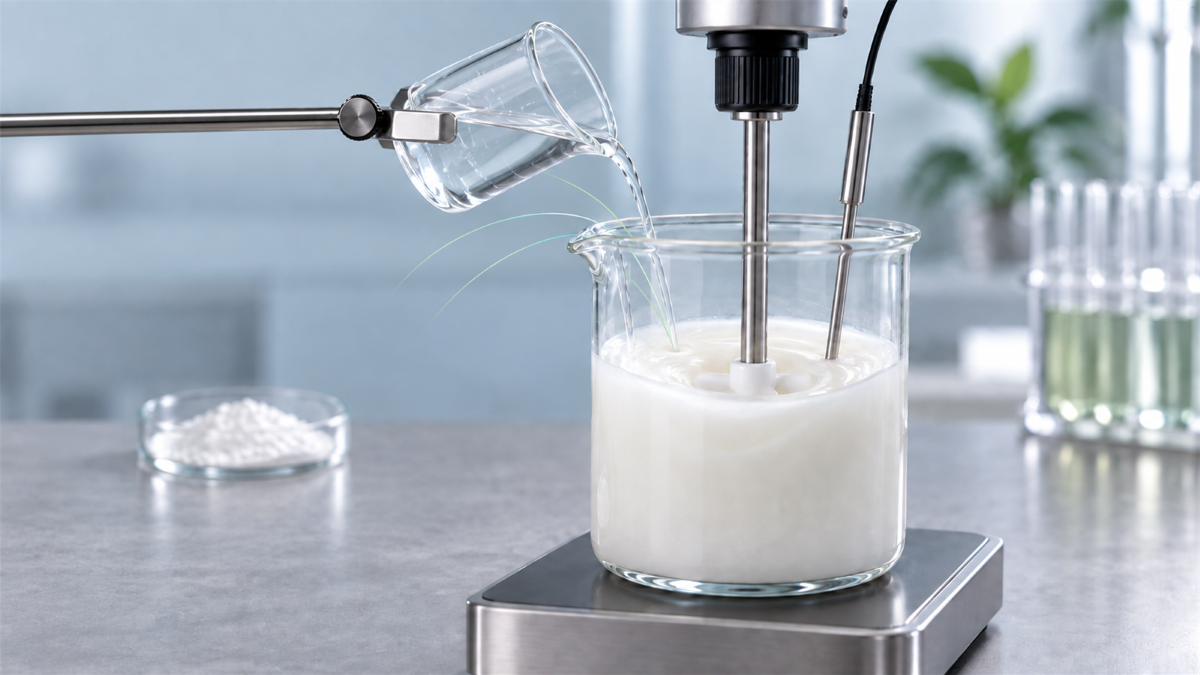
During early prototype development, formulators may include solvent-support ingredients such as our AC-DMI (Dimethyl Isosorbide) in screening work to evaluate salicylic acid incorporation, formula clarity, and compatibility in active skincare systems.
The final solvent system should then be confirmed through compatibility testing, clarity observation, and finished-formula stability evaluation.
A salicylic acid formula should not be judged only by its appearance after production.
During stability testing, freeze-thaw cycles and accelerated storage conditions can reveal problems that are not visible during initial evaluation.
If crystals appear after temperature stress, the cause may relate to insufficient solubilization capacity, solvent compatibility, concentration balance, or temperature sensitivity.
Identifying these issues during early development helps reduce risks during scale-up and commercial production.
pH, pKa, and Free Acid: Why Concentration Alone Does Not Define Performance
In acid-based skincare development, total concentration is only one part of formula performance.
The behavior of an acid is influenced by pH, pKa, and free acid percentage.
Glycolic acid is commonly reported with a pKa of approximately 3.83, while salicylic acid is commonly reported with a pKa of approximately 2.97 in standard chemical databases such as PubChem. In formulation work, these values are used to estimate acid dissociation behavior, but they should not be treated as a direct predictor of finished-product performance. Final pH, solvent system, active concentration, product format, and stability testing all influence how the acid behaves in the final formula.
As a result, two formulas containing the same acid percentage may behave differently depending on their pH environment and delivery system.
For formulators, evaluating an exfoliating active requires looking beyond acid concentration alone. A 5% acid formula does not necessarily behave the same across different systems. For example, a 5% glycolic acid toner and a 5% salicylic acid serum may require different prototype screening approaches because pH, solvent environment, exposure time, and delivery system can influence stability, free acid availability, and consumer tolerance.
Key evaluation factors include:
Acid concentration, pH condition, and free acid availability, which influence active behavior and exfoliation intensity within the formula.
Exposure time, product format, and usage frequency, since a rinse-off cleanser, daily toner, and leave-on serum create different tolerance requirements.
Before confirming product positioning, formulation teams should review the target market and product category, including cosmetic ingredient restrictions, permitted claim wording, acid level, final pH, and whether the product is leave-on or rinse-off.
Finished-product testing, including efficacy evaluation, stability testing, and compatibility assessment, to confirm that the final formula performs as intended.
A glycolic acid toner and a salicylic acid serum should not be compared by active percentage alone, because ingredient chemistry, pH environment, solvent system, and product format all influence performance and tolerance.
Building Acid-Based Product Lines: Why Separate SKUs Often Work Better
Although glycolic acid and salicylic acid can both be used in skincare development, combining them into one formula is not always the most efficient strategy.
Multiple exfoliating acids can increase complexity in pH adjustment, solvent compatibility, stability testing, and tolerance evaluation.
Many brands achieve clearer product positioning by developing separate products.
Product
Active System
Development Purpose
Clarifying Cleanser
Salicylic Acid + Zinc PCA
Pore cleansing and oil-control positioning
Renewal Serum
Glycolic Acid + Alpha-Arbutin
Texture refinement and radiance positioning
Barrier Cream
Ceramides + Bisabolol
Comfort support for active skincare routines
A salicylic acid cleanser can focus on pore cleansing, while a glycolic acid serum can address post-blemish tone, uneven texture, and radiance.
This approach gives each active ingredient a clear role within the product portfolio.
Supporting Actives for Balanced Acid Formulations
Acid-based skincare products are often developed with complementary ingredients to balance active performance, skin comfort, and product positioning.
Supporting active selection should follow the acid route and target SKU positioning. For oil-control and clarifying systems, AC-ZPCA (Zinc PCA) can be considered alongside salicylic acid-based concepts. For leave-on acid formulas where skin comfort is a priority, Ceramide Series may help balance active performance with barrier-focused formulation design. Comfort-oriented actives such as BioSyn-Bisabolol, or renewal-focused options such as HPR Series, can be evaluated later based on the final product concept.
These complementary ingredients allow brands to build targeted skincare systems around different product objectives, including exfoliation, oil control, barrier support, and renewal.
Common Formulation Mistakes When Choosing Exfoliating Acids
The first mistake is treating glycolic acid and salicylic acid as interchangeable ingredients.
Although both are exfoliating acids, they support different formulation objectives. Glycolic acid is generally aligned with radiance and renewal products, while salicylic acid is better suited for pore-focused and oil-control formulas.
The second mistake is selecting acids based only on market trends.
A successful formula begins with a clear connection between the consumer concern, product format, active ingredient function, and stability requirements.
For example, salicylic acid systems may require earlier solvent screening, while low-pH glycolic acid formulas need careful compatibility review before adding pH-sensitive brightening actives.
Final Recommendation: Match the Active System With the Product Objective
Glycolic acid and salicylic acid are not competing ingredients. They are different formulation tools designed for different skincare objectives.
Glycolic acid is better suited for formulas focused on radiance, uneven tone, texture refinement, and renewal positioning.
Salicylic acid is better suited for products targeting oily skin, clogged pores, blackheads, and blemish-prone concerns.
For your team, selecting the right exfoliating active means matching the active to the intended formula architecture, from raw material grade and pH range to product format, supporting actives, and stability expectations.
Request AC-GLA Type Selection Support & Sample Kit
Our technical team can help you evaluate AC-GLA type selection, acid-based formulation direction, and complementary active recommendations.
Request our AC-GLA Type Selection Support & Sample Kit, or contact our technical team to discuss acid selection, solvent-support options, and complementary actives for your next exfoliating or clarifying skincare formula.
FAQ
What is the main difference between glycolic acid and salicylic acid?
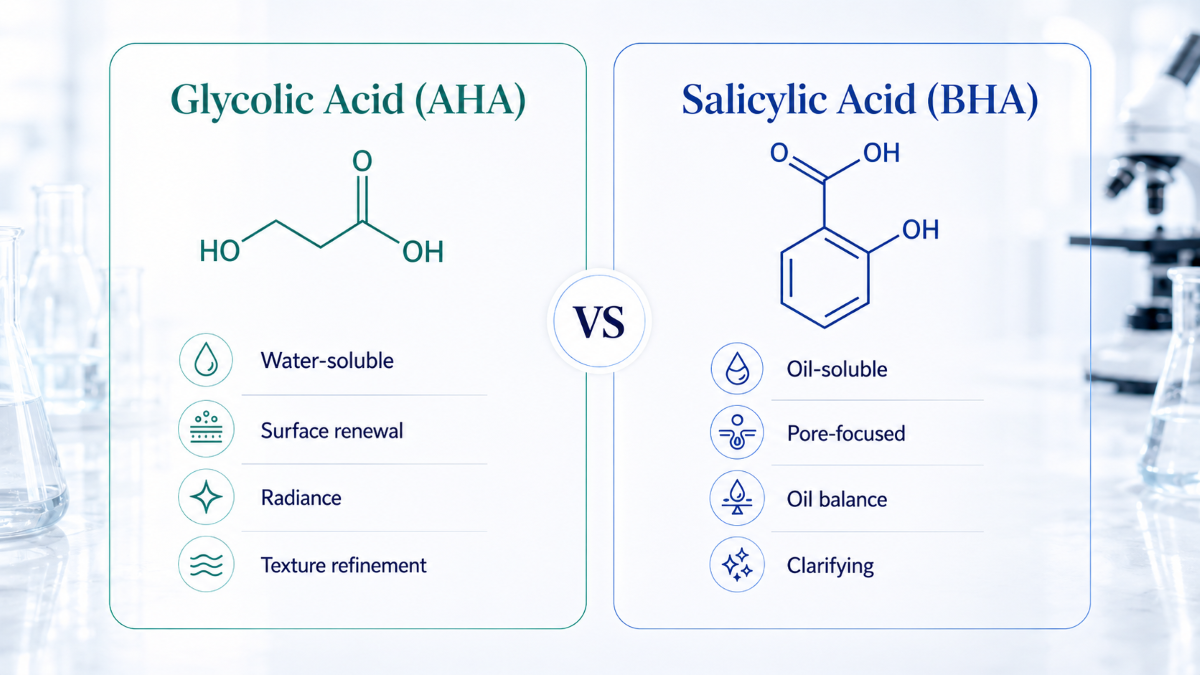
Glycolic acid is a water-soluble AHA mainly used for surface renewal and texture refinement. Salicylic acid is an oil-soluble BHA commonly used for pore-focused and oil-control formulations.
Which acid is better for radiance-focused products?
Glycolic acid is generally better suited for radiance, uneven tone, and texture-refining products.
Can glycolic acid and salicylic acid be used together?
They can be used in the same product concept, but the decision requires careful evaluation of final pH, solvent system, irritation potential, stability, and target-market claim requirements. In many product lines, separate SKUs are easier to optimize and position.
Which acid is better for acne-prone formulas?
Salicylic acid is commonly used for oily skin, clogged pores, blackheads, and blemish-focused products.
How should you choose AC-GLA 70% or AC-GLA 99%?
AC-GLA 70% is often suitable for aqueous systems, while AC-GLA 99% provides greater flexibility for concentrated formulas and tighter water control.
What are the main challenges when developing salicylic acid formulas?
The main challenges include solubility management, solvent selection, clarity control, crystallization risk, and maintaining sensory quality during storage.
By clicking "Accept," you agree to the storing of cookies on your device to enhance site navigation, analyze site usage, and assist in our marketing efforts.